
News & Blogs

What Are the Best 40 Foot Storage Containers in 2026?

Choosing among 40 foot storage containers in 2026 takes more than comparing prices. The right unit should fit your inventory, delivery site, and daily access needs. A standard container offers substantial floor space, but its interior dimensions are smaller than its exterior footprint. Measure bulky items, shelving, and doorways before ordering. A few inches can matter.

Container-transport scholar Jean-Paul Rodrigue’s research highlights how standardized dimensions support handling across transport systems. In paraphrase, the practical lesson is simple: standard size does not guarantee a good fit for every site. Check the door opening, floor condition, roof, corner posts, and door seals. Look closely for rust, soft flooring, and daylight around closed doors. Small defects can become costly headaches. New units usually show less wear, while used units vary widely in condition. Ask for recent photos and a clear description of repairs.

Delivery deserves equal attention. A long truck needs room to turn and unload, and the ground should support the container’s weight. Confirm the drop location before booking. Is the entrance wide enough? Also consider ventilation, insulation, and lock protection if stored goods need them. These features are not standard on every model. There is no single best choice. This guide compares common container types, condition grades, key features, and practical buying checks, helping readers choose with clearer expectations—and fewer surprises after delivery.
What Are the Best 40 Foot Storage Containers in 2026?

How ISO 668 Defines Standard 40-Foot and High-Cube Containers

ISO 668:2020 defines the nominal external dimensions of Series 1 freight containers. A standard 40-foot container measures 12,192 mm long, 2,438 mm wide, and 2,591 mm high. The 40-foot high-cube keeps the same length and width but adds 305 mm of height, reaching 2,896 mm. That extra space can help with tall cargo or bulky loads. The standard defines the outside envelope, not every interior measurement.

Real usable space varies with wall thickness, flooring, and door construction. That distinction is easy to overlook. Check the specific unit’s interior dimensions and payload rating before planning a load. UNCTAD’s Review of Maritime Transport 2024 reports that global container port throughput reached 858.2 million TEUs in 2023. Standardized dimensions help containers move through a vast network, but they do not guarantee a perfect fit for every shipment.

Tips: Measure the cargo, including packaging, and compare it with the container’s interior height and door opening. For tall items, check whether the doors reduce usable clearance. Also verify the data plate: two containers with the same ISO size may have different payload limits. It’s worth checking twice.

Standard 40-Foot vs. High-Cube Container Dimensions (ISO 668)

ISO 668 nominal external dimensions: both container types are 12,192 mm long and 2,438 mm wide. A standard container is 2,591 mm high, while a high-cube container is 2,896 mm high. Actual internal dimensions can vary.

Compare External Heights: 2.59 m Standard vs. 2.90 m High-Cube

For a 40-foot storage container, the height difference is about 0.30 m, but that can decide what fits. ISO 668:2020 specifies nominal external heights of 2.591 m for standard containers and 2.896 m for high-cube units. The Container Handbook, published by Germany’s insurance association GDV, lists the same height classes. That matters. A tall shelving frame, stacked pallets, or a ceiling-mounted light may fit more comfortably in a high-cube unit.

External height is not usable interior clearance. GDV’s dimensional tables show approximate internal heights of 2.39 m for standard units and 2.69 m for high-cube units. Roof supports, flooring, and door framing also affect loading space, so check the actual unit before buying or renting. Measure twice. A high-cube container may suit bulky items, yet its extra height can complicate placement under low canopies or near overhead obstacles. I would not choose by height alone; check the door opening and site access, too. A few centimeters can matter when moving a rigid cabinet through the doorway.

Compare Typical Capacities: 67.7 m³ Standard vs. 76.3 m³ High-Cube

A 40-foot standard container typically provides about 67.7 m³ of internal capacity. A 40-foot high-cube unit offers roughly 76.3 m³, around 12.7% more nominal volume. The German Insurance Association’s Container Handbook lists these typical capacities, while noting that dimensions can vary by container design. That gap matters. The extra height can help when cartons or light, bulky goods are difficult to stack within a standard unit.

More volume does not automatically mean more usable cargo space. Pallet layouts, door openings, load stability, and permitted payload can limit what fits safely. A high-cube container may suit tall furniture or boxed goods, but dense cargo can reach weight limits before filling the available volume. Not always. Measure the actual cargo and check the container’s door and interior dimensions before booking. I would not choose by cubic meters alone; a tight pallet plan can change the answer.

Tips: Compare your tallest loaded pallet with the door opening, not just the interior height. Leave room for handling, and confirm the container’s actual specifications with its supplier.

Check Payload Ratings, CSC Plates, and ISO 1496-1 Compliance

A 40-foot storage container is only a good fit when its payload rating matches the load. Check the data plate on the actual unit, not a listing for a similar model. Payload means the cargo weight the container can carry; it is not the same as maximum gross weight. Subtract the tare weight from the maximum gross weight to cross-check the stated payload. Then compare the result with your planned load and leave a sensible margin. Small errors add up.

Inspect the CSC plate for its safety approval details and examination information. A plate that is missing, unreadable, or inconsistent with the container’s records deserves closer review. Ask for clear photographs and current inspection documentation before arranging delivery. Look closely at the doors, corner castings, and floor too; a sound plate cannot prove that every part is in good condition. Not glamorous, but important.

ISO 1496-1 sets requirements for Series 1 freight containers, including testing and performance criteria. Ask the seller for documentation showing that the specific unit meets the stated standard, rather than relying on a general claim. Confirm its dimensions and ratings against your intended use, especially if equipment or shelving will reduce usable space. I would still verify the figures independently. Paperwork can be imperfect, and one overlooked rating may matter more than a fresh coat of paint.

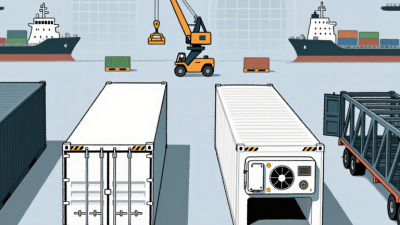
Match Dry, High-Cube, Refrigerated, and Open-Side Units to Your Needs

A 40-foot dry container suits palletized goods, furniture, tools, or equipment that can tolerate ambient temperatures. Its enclosed steel walls keep out ordinary rain and wind when doors and seals are in sound condition. Check the interior dimensions, door opening, and floor condition before planning a load; measurements can vary by unit. A few centimeters can change whether bulky items fit.

A high-cube unit adds roughly one foot of interior height compared with a standard-height container, useful for tall crates or stacked light goods. That extra space does not increase the floor area. For temperature-sensitive cargo, a refrigerated unit offers active cooling, but it needs a reliable power supply and regular checks of its machinery and seals.

That matters. Without power, cooling cannot continue.

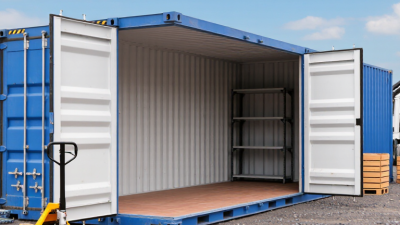
An open-side container provides wider access along one wall, making long items or side-loading easier when a rear-door approach is awkward. The larger opening can also mean more hardware to inspect and secure. Think about the delivery site, loading equipment, and daily access before choosing.

I would not select a container by capacity alone; a poor fit can waste space and complicate handling. Not always. A simple dry unit may be the better choice when the extra features have no clear job.