
China plays a major role in the global cargo container industry. Its manufacturers supply standard dry freight units and specialized designs for diverse shipping and logistics needs. Companies differ in scale, product range, engineering capacity, and customer support. A familiar name is not enough. Buyers need evidence.
This guide examines established Chinese manufacturers, including CIMC, CXIC, and Singamas, without claiming that one supplier is universally “best.” It compares practical factors such as product types, manufacturing experience, quality-control processes, customization, delivery capacity, and after-sales service. Details matter. Buyers may check steel specifications, door hardware, weld finish, flooring, and documentation before requesting a quotation. These details can help show whether a product suits its intended use, not just whether its price looks attractive.
This comparison is a starting point, not a substitute for supplier due diligence. Product availability, factory capabilities, and certifications may change, while public information may leave important questions unanswered. That limitation matters. Confirm current specifications directly with manufacturers, and request relevant inspection records or sample documents. The sections ahead explain what distinguishes major cargo container makers in China and offer a practical framework for assessing their products with care.
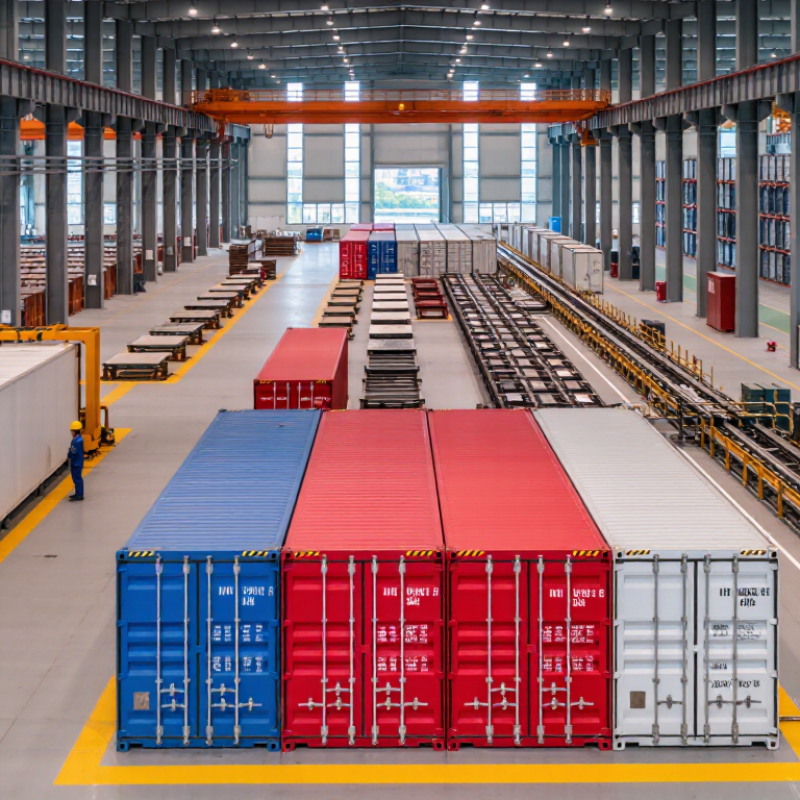
China’s cargo container manufacturing industry is built around dense supply networks linking steel processors, component makers, ports, and logistics firms. Coastal production clusters can source fittings, flooring, and coatings with relatively short transport times. A typical container passes through cutting, forming, welding, inspection, and finishing. Small details matter.
For buyers, compare documented production capacity, weld inspection records, coating checks, and repair support—not price alone. Inspect sample doors, locking bars, and floor joints; these parts face repeated handling and weather exposure. Clear specifications make comparisons more reliable. A smooth paint surface is useful, but it cannot prove sound welds or accurate dimensions.
Manufacturers are adding automated welding and digital tracking to improve consistency and production visibility. Yet automation does not guarantee quality. Some operations still rely heavily on manual checks, which deserves honest scrutiny. I would treat process records and physical inspection as stronger evidence than impressive factory claims. The shift is uneven, and smaller production runs may need different checks from high-volume orders.
A reliable cargo container manufacturer should show consistent production capability, not just an impressive factory tour. Ask how it controls steel quality, welding, and dimensional checks across regular production runs. Inspect sample welds and door seals closely. Small gaps can become costly problems after repeated loading and exposure to rain. A polished sample is useful, but it cannot prove every unit is equally sound.
Quality records matter. Request inspection reports, material traceability, and evidence of recognized management systems, then check that documents match the actual products and facility. Ask how defects are recorded and corrected. Clear answers are a good sign. Vague promises are not. Delivery capacity also deserves scrutiny: compare stated lead times with recent production schedules, staffing, and access to key materials. A low price may hide a tight schedule or thinner inspection coverage.
After-sales support is part of the assessment. Clarify who handles warranty questions, replacement parts, and technical issues, and how quickly they respond. References from customers with similar container needs can help, though references may not reveal every weakness. No checklist is perfect. Even experienced buyers can overvalue a clean showroom and overlook everyday details, such as whether inspection records are easy to retrieve.
Standard external lengths provide one objective starting point when evaluating cargo container manufacturers.
Use these dimensions as a baseline, not a manufacturer ranking. For a fuller assessment, verify ISO 668 dimensional conformity and tolerances, ISO 1496-1 design and testing evidence, and applicable CSC safety-approval records. Lengths shown are nominal external dimensions.
Source: ISO 668, Series 1 freight containers—Classification, dimensions and ratings.
China’s major cargo container manufacturers serve shipping, leasing, logistics, and industrial customers. Many produce standard dry containers, while others build refrigerated units and containers for specialized cargo. Manufacturing is concentrated in coastal industrial regions, where steel processing, component suppliers, and export infrastructure are close at hand.
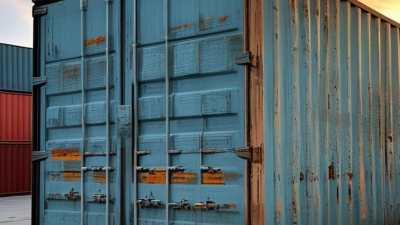
A container’s quality shows in small details. Check weld consistency, corner castings, door alignment, seals, coating coverage, and floor condition. For refrigerated models, ask how temperature-control performance is tested and documented. Request production records and inspect a sample when possible. A polished specification sheet is not the whole story. It can miss uneven paint or a door that sticks under load. That distinction matters.
When comparing manufacturers, look beyond the quoted price. Confirm dimensions, payload, delivery schedule, warranty terms, and inspection procedures in writing. Ask how defects are handled after delivery. Short answers are not enough. A clear factory audit or third-party inspection can help verify capacity and workmanship, though neither guarantees every unit will be perfect. Container needs differ, and the cheapest offer may not fit the route or service life.
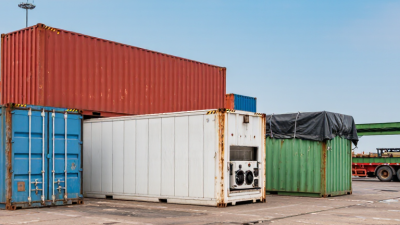
China’s container manufacturers produce equipment for different cargo and operating conditions. Dry freight containers handle general goods and remain the most familiar type. Refrigerated units add insulation and cooling systems for temperature-sensitive shipments. Open-top and flat-rack designs accommodate tall, wide, or awkwardly shaped loads. Tank containers serve liquid transport, but require specialized engineering and inspection. The right type depends on cargo dimensions, handling methods, and route conditions.
Production capabilities vary by factory. Common processes include cutting and forming steel, automated welding, surface coating, and final inspection. Some facilities also assemble refrigeration systems or adapt interior fittings to customer specifications. Ask how the manufacturer checks weld quality, coating thickness, door seals, and dimensions. A factory’s stated output alone does not show whether its quality controls are consistent. Details matter.
Tips: Request a sample inspection report and confirm the exact configuration before ordering. Check usable internal dimensions, payload, floor material, and any temperature range required. A specification can look complete on paper yet miss a practical detail, such as forklift clearance. That is easy to overlook. Production schedules and customization options may also change with component availability, so confirm them in writing.
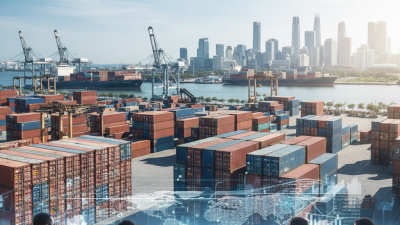
China’s container manufacturing network reaches far beyond factory gates. The Container xChange Container Market Annual Review 2023 reports that China produces more than 95% of the world’s new shipping containers. This concentration supports large export orders and steady supply to ports across major trade routes. A container built inland may move by rail to a coastal terminal, then travel by ship to a distant distribution hub.
Scale matters. UNCTAD’s Review of Maritime Transport 2024 puts China’s share of global container port throughput at around 30%. That figure helps explain why production and shipping networks often meet in the same market. For buyers, the practical benefits can include broad equipment availability and established export logistics. Still, lead times vary with factory schedules, port congestion, and access to inland transport. A steel box does not move itself.
That reach is real. It is not frictionless. Heavy dependence on one production region can leave buyers exposed to disruptions, and long-distance delivery adds cost and planning time. Even a small delay at a rail terminal can shift a vessel booking. The figures show scale, but they do not guarantee a smooth delivery for every order. Logistics details matter.