

A 40 foot shipping container can look like a simple steel box, yet its design changes what it can carry and how it handles cargo. The UNCTAD Review of Maritime Transport 2024 reports that global container-port throughput reached 858.9 million TEU in 2023, up 2.4 percent from 2022. That scale helps explain why choosing suitable equipment matters. A poor fit can waste usable space or complicate loading. The details matter.
ISO 668 defines standard container dimensions. A typical 40-foot unit is about 12.19 metres long and 2.44 metres wide; a high-cube version adds roughly 30 centimetres of height. Other common options include refrigerated containers for temperature-sensitive goods, open-top units for top loading, and flat racks for oversized cargo. Drewry container-equipment analyst John Fossey’s market perspective can be paraphrased this way: equipment decisions should reflect both cargo requirements and available container supply. This is a paraphrase, not a verbatim quotation. It is a useful reminder, though no single type suits every shipment. A chilled load and a tall machine need different features.
This guide compares the leading types of 40 foot shipping container, their practical uses, and the details buyers should check. Dimensions and payload limits vary by model and manufacturer, so confirm the specification plate before making a decision. That small check is easy to overlook.
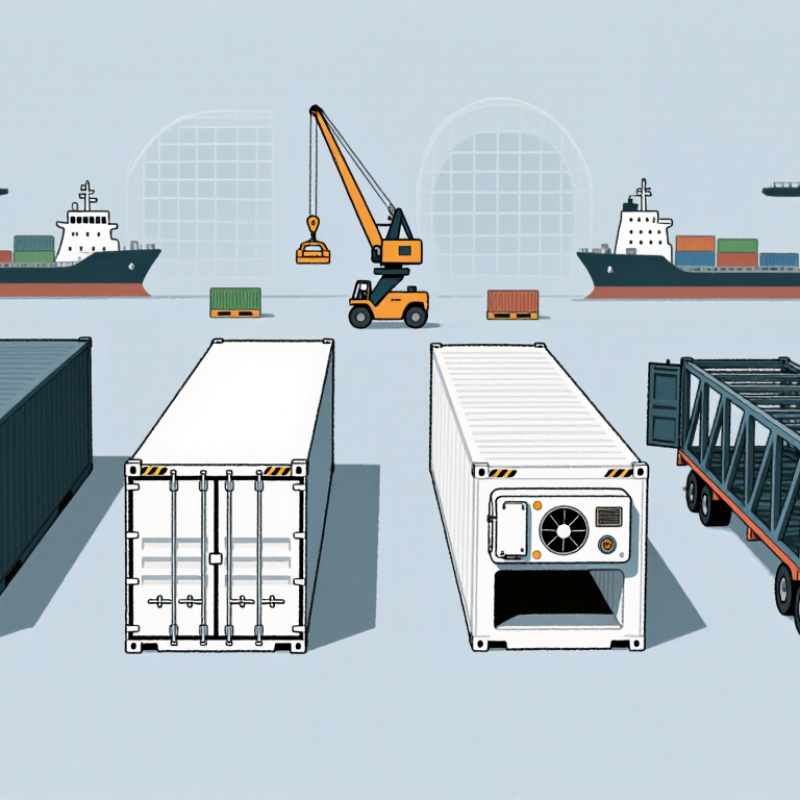
A standard 40-foot dry container is an enclosed steel box for general, non-temperature-controlled cargo. ISO 668:2020 sets its nominal external dimensions at 12.192 metres long, 2.438 metres wide, and 2.591 metres high. Inside, usable space is typically about 67 cubic metres, though door frames, wall thickness, and container condition reduce or alter the practical loading space. Measure the actual unit before planning a tight fit. Small differences matter.
The UNCTAD Review of Maritime Transport 2024 reports global container-port throughput of 858.9 million TEU in 2023, reflecting the scale of containerized trade. A standard 40-foot box equals two TEU in capacity accounting, but that does not mean every load uses its volume efficiently. Dense cargo may reach the permitted payload before the container is full; light, bulky cartons can do the reverse. Check the container’s data plate for its specific gross and payload limits, rather than relying on a generic figure. A dry container suits palletized goods, furniture, machinery, and boxed materials that need weather protection, not controlled temperature. In practice, door clearance and forklift access can be overlooked. That’s easy to do. Sources: ISO 668:2020; UNCTAD, Review of Maritime Transport 2024.
| Specification | Typical value | Details |
|---|---|---|
| Container type | 40-foot standard dry | Enclosed, general-purpose container for cargo that does not require temperature control. |
| External dimensions | 12.19 × 2.44 × 2.59 m (40 ft × 8 ft × 8 ft 6 in) |
Length × width × height; standard nominal dimensions. |
| Internal dimensions | About 12.03 × 2.35 × 2.39 m (39 ft 5 in × 7 ft 8 in × 7 ft 10 in) |
Approximate usable interior; measurements vary slightly by manufacturer and container design. |
| Door opening | About 2.34 m wide × 2.28 m high (7 ft 8 in × 7 ft 5 in) |
Check the actual opening when cargo dimensions are close to the limit. |
| Internal volume | About 67.7 m³ (approximately 2,390 ft³) |
Nominal capacity; packing layout and cargo shape affect usable space. |
| Tare weight | Typically about 3,700–3,900 kg | The empty container’s weight; consult the individual container’s markings for its exact tare. |
| Maximum gross weight | Often 30,480 kg | The permitted loaded weight depends on the container’s rating and applicable transport rules. |
| Payload | Usually around 26,500–26,800 kg | Approximate cargo capacity, calculated as maximum gross weight minus tare weight; verify the container’s rating plate. |
Dimensions and weight ratings are typical reference values, not guarantees. Always confirm the specifications shown on the specific container.
A 40-foot high cube container adds vertical room without increasing its floor footprint. That extra height can help when loading tall machinery, bulky furniture, or palletized goods. The Container Handbook, published by the German Insurance Association, lists an approximate internal height of 2.69 metres for a high cube, compared with about 2.39 metres for a standard container. Its listed internal volume is roughly 76 cubic metres, though actual usable space varies by construction and fittings. Check the unit’s specification plate before planning a load.
Tips: Measure the tallest item, including packaging. Leave clearance above it. Check door height too; a tall interior does not guarantee easy loading. Keep heavy items secured, and confirm the floor can support the planned load.
That extra space is useful, but it is not free capacity in every sense. Taller loads can shift, and the added height may affect how a container fits into a site or handling setup. Inspect the roof, door seals, and floor before use. A small dent or worn seal can matter more than the advertised volume. Specifications can differ between units, so treat published dimensions as a starting point, not a promise. I would also allow space for bracing; people often calculate the cargo perfectly and forget what keeps it still.
A 40-foot refrigerated container, often called a reefer, is designed for cargo that needs a controlled temperature during transport or storage. Its insulated walls and refrigeration unit help maintain a chosen setting, while fans circulate air through the load. It is useful for chilled produce, frozen foods, and other temperature-sensitive goods. Exact operating ranges and usable capacity vary by unit, so check the equipment specifications before booking. Power matters. Reefers generally need a reliable electrical connection while stationary, and suitable power support during transport. They maintain cargo temperature; they are not meant to rapidly cool warm goods. Pre-cooling cargo is important.
Tips: Confirm the required set point with the cargo handler, inspect the unit’s seals and drain openings, and check that airflow paths will not be blocked. Leave space around the load where the equipment instructions require it. Record temperature readings during handling. One easy assumption is that a running unit guarantees even temperatures; loading patterns and door openings can still create warm spots.
Before loading, verify the container’s temperature display and note any alarms or visible damage. Keep packaging dry and stable, and avoid stacking beyond the stated limits. These checks take time, but skipping them can make a small problem harder to trace later.
Open-top and flat-rack containers suit 40-foot loads that cannot pass through standard container doors. An open-top unit has a removable roof or tarpaulin, allowing a crane to lower tall machinery from above. A flat rack has end walls and no full side walls, leaving room for wide equipment or long components. That matters. ISO 668:2020 specifies a standard 40-foot container’s external length as 12.192 metres and width as 2.438 metres. Internal clearance is smaller, and fittings can reduce usable space further. UNCTAD’s Review of Maritime Transport 2024 reported that containerized trade grew 0.3% in 2023. That modest growth is a reminder that specialized equipment is only one part of planning a shipment.
For an open-top load, measure the highest point, including lifting eyes and protective covers, before booking. Check the opening and overhead clearance, not just the container’s nominal height. Flat racks need careful load distribution and rated lashing points; concentrated weight can create problems even when the cargo fits. Payload limits vary by unit, so confirm the container’s individual data plate and arrange a suitable lift plan. A tape measure helps, but it cannot replace a loading assessment. I would also leave room for uncertainty: cargo dimensions can change during packing, and quoted clearances may not account for every fitting.
Specialized 40-foot containers help when standard enclosed space is not enough. A refrigerated unit has insulated walls and a cooling system for temperature-sensitive goods. Set the required temperature before loading, and check that the cargo is already at the right temperature. A reefer is not a quick fix for warm goods. Its floor channels also need to stay clear so air can circulate.
For tall or awkward cargo, an open-top container allows loading from above. A removable roof cover helps protect freight, but it does not offer the same protection as a solid roof. Weather exposure deserves attention. Flat-rack containers suit bulky machinery or other loads that extend beyond standard container dimensions. Their exposed sides make secure lashing and a careful loading plan essential. Even experienced shippers can overlook how the cargo shifts during transit.
A 40-foot high-cube container provides extra interior height compared with a standard-height unit, which can help with light, bulky freight. Exact usable dimensions and payload limits vary by container and carrier, so check the unit’s data plate and cargo measurements before booking. That small step matters. The specialized option is only useful when its condition, handling needs, and route match the cargo. A mismatched container can add cost or create avoidable delays.