
 عربي
 عربي
News & Blogs
7 Tips for Choosing a Refrigerated Storage Container?
Choosing a refrigerated storage container is not simply a matter of finding the coldest box. The right unit must protect products during loading, transport, storage, and repeated opening. Temperature stability matters more than a dramatic specification sheet. A container that reaches 2°C but swings widely may still damage sensitive goods. This guide introduces seven practical tips for comparing insulation, cooling performance, capacity, monitoring, cleaning, power needs, and service support. Small details matter. A weak door seal can undo expensive refrigeration.
From warehouse assessments and routine handling, I have seen how quickly poor choices become visible. Frost forms around an uneven gasket. Warm air enters during every opening. A crowded interior blocks circulation near the rear wall. These signs often appear before a temperature alarm does. Check the manufacturer’s test data, but question vague claims. Confirm the intended temperature range, recovery time, humidity limits, and operating environment. A calibrated data logger can reveal conditions that a built-in display misses. It is not glamorous, but it is useful.
The safest decision also considers cleaning access, drainage, internal materials, and emergency procedures. Verify that the design suits the product, location, and approved handling requirements. Do not rely on appearance alone. I once treated a compact model as the efficient option, then noticed its usable capacity was much smaller than advertised. That was a poor assumption. The following tips help buyers compare real-world performance with long-term costs. They are not a substitute for product-specific technical guidance, but they create a stronger starting point.
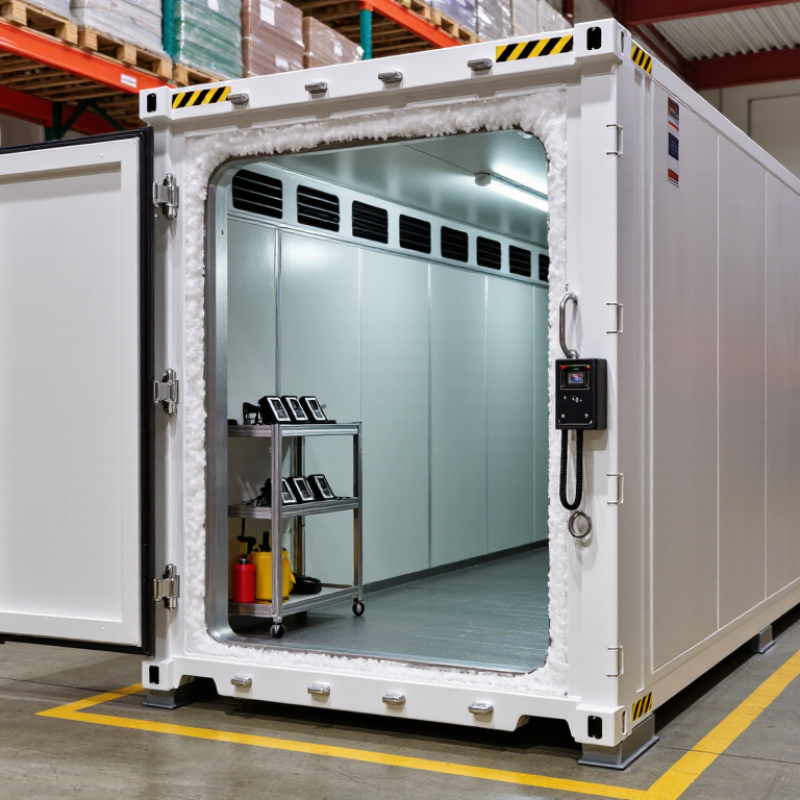
Define the Cargo: Chilled, Frozen, or Temperature-Sensitive Goods
7 Tips for Choosing a Refrigerated Storage Container
Define the cargo before choosing the container. Chilled goods usually require controlled temperatures above freezing, while frozen goods need stable sub-zero conditions. Temperature-sensitive products may need tighter limits, faster loading, or continuous monitoring. The product label should decide the range, not guesswork. FAO’s State of Food and Agriculture 2019 estimated that 14% of food is lost between harvest and retail. Poor temperature control contributes to this avoidable waste. Tip 1: Record the product’s safe temperature range. Tip 2: Note its freezing point and maximum exposure time.
Tip 3: Choose chilled storage with enough airflow around cartons. Dense stacking can create warm pockets near the center. Tip 4: Select frozen storage based on the required setpoint, not the average weather. A container operating at -18°C may not suit every frozen product. Tip 5: Check door-opening frequency and loading duration. Brief exposure matters more for sensitive cargo. Sometimes, much more than expected.
For pharmaceuticals, biological materials, and other temperature-sensitive goods, follow the manufacturer’s instructions and validated handling procedures. Many vaccines use a 2°C to 8°C range, according to World Health Organization guidance, but products differ. Tip 6: Install calibrated data loggers at representative points, including near doors. Tip 7: Request temperature mapping before regular use. Inspect insulation, seals, drainage, and backup power arrangements. A refrigerated container can look reliable while hiding weak door seals. I have seen specifications treated as guarantees; they are not. Ask for recent maintenance records, alarm tests, and calibration certificates before loading valuable cargo.
7 Tips for Choosing a Refrigerated Storage Container? - Define the Cargo: Chilled, Frozen, or Temperature-Sensitive Goods
| Tip | Cargo Category | Typical Product Examples | Common Storage Range* | Recommended Container Features | Selection Check |
|---|---|---|---|---|---|
| 1 | Chilled goods | Fresh meat, poultry, seafood, dairy products, and prepared foods | Generally above 0°C and commonly between 0°C and 5°C, depending on the product | Precise temperature control, strong air circulation, washable interior, and adjustable set point | Confirm the product specification before setting the thermostat; avoid freezing products that must remain chilled |
| 2 | Frozen goods | Frozen vegetables, frozen seafood, ice cream, and frozen meat | Typically −18°C or colder for long-term frozen storage | Low-temperature refrigeration, insulated walls, reliable defrost control, and continuous temperature logging | Check that the unit can maintain the required temperature under the expected ambient conditions and loading pattern |
| 3 | Temperature-sensitive goods | Certain medicines, laboratory materials, vaccines, and specialty chemicals | Product-specific; many refrigerated products require 2°C to 8°C, but the label or specification takes priority | Tight temperature stability, calibrated sensors, alarms, data recording, and documented operating procedures | Use the manufacturer’s validated temperature range and define excursion, alarm, and emergency-response procedures |
| 4 | Fresh produce | Leafy greens, berries, apples, citrus fruit, and root vegetables | Varies widely; approximately 0°C to 13°C depending on crop, maturity, and sensitivity to chilling injury | Adjustable temperature, high air circulation, humidity management, and ventilation where required | Do not use one set point for mixed produce without checking compatibility, ethylene sensitivity, and humidity needs |
| 5 | Short-term holding or cross-docking | Incoming food, retail replenishment, and goods awaiting distribution | Follow the cargo’s required range; short storage does not eliminate temperature-control requirements | Fast pull-down, rapid recovery after door opening, strip curtains, and easy loading access | Evaluate door-opening frequency, loading time, and product temperature at arrival—not only the air temperature |
| 6 | Mixed-load storage | Different chilled foods or products with similar temperature requirements | Use the narrowest compatible range required by all products | Zoned airflow, adjustable shelving, good product separation, and independent monitoring when possible | Verify compatibility for temperature, odor transfer, humidity, sanitation, and food-allergen control |
| 7 | High-risk or regulated cargo | Products subject to food-safety, pharmaceutical, laboratory, or hazardous-material requirements | Defined by the applicable product label, safety data, contract, or regulatory requirement | Validated performance, alarm escalation, backup power planning, access control, sanitation records, and maintenance history | Review documentation, calibration status, emergency procedures, and local regulatory obligations before purchase |
*Temperature ranges are general industry examples, not universal limits. Always follow the product label, supplier instructions, applicable regulations, and validated storage procedures.
Related Posts
-
2026 Top Refrigerated Container Types for Global Buyers
-
China Best Freezer Shipping Container for Global Buyers?
-
7 Best Freezer Shipping Containers for Sale?
-

China Top Storage Shipping Containers for Global Buyers?
-

China Top 10 Container Size Types for Global Buyers
-

2026 Best Ocean Containers for Global Buyers to Consider?