
News & Blogs

Top Types of Second Hand Shipping Containers Worldwide?

Choosing among second hand shipping containers requires more than comparing paint, age, and advertised prices. This guide examines the top types used worldwide, including standard dry vans, high-cube units, refrigerated containers, open-top models, and flat racks. Each type serves a different purpose. A high-cube container may suit workshop storage, while a reefer needs careful inspection of its cooling system, insulation, and power requirements.

Condition varies sharply between suppliers and regions. Salt air can leave rust around door frames, hinges, and roof seams. A recently repainted container may still hide corrosion underneath. Buyers should check the floor, locking bars, rubber seals, welds, identification plate, and previous maintenance records. They should also confirm delivery access, local placement rules, and whether the unit remains suitable for its intended use. Small details matter.

Maritime historian Marc Levinson wrote, “The container made the modern economy possible.” His observation also explains why durable used units remain valuable after ocean service. However, the cheapest option is not always the best option. A low purchase price can become expensive after transport, repairs, ventilation work, or repainting. That point is easy to overlook.

This overview combines practical inspection experience with equipment-specific guidance. It also recognizes an uncomfortable truth: condition grades are not perfectly consistent worldwide. Buyers should request dated photographs, independent inspection, and written specifications before committing. With realistic expectations, second hand shipping containers can provide secure, adaptable, and cost-conscious space for farms, businesses, construction sites, and personal projects.
Top Types of Second Hand Shipping Containers Worldwide?

What Second Hand Shipping Containers Are and How They Are Classified

Top Types of Second Hand Shipping Containers Worldwide

Second hand shipping containers are steel units that previously carried goods by sea, rail, or road. Their classification usually begins with design and purpose. Standard dry containers are the most common type. They have solid walls, rear doors, and a sealed floor. High-cube containers offer extra internal height, often useful for storage or workshop projects. Dimensions can vary slightly by manufacturing region, so measurements should be checked before purchase.

Some containers serve specialized transport needs. Refrigerated containers contain insulated panels and cooling equipment. Their condition depends heavily on power-system testing and temperature records. Open-top containers have removable roof covers for tall or bulky cargo. Flat-rack containers use collapsible ends and exposed sides. They are suited to heavy machinery, but their floors and corner posts need careful inspection. Tank containers are designed for regulated liquid transport and require professional verification before reuse.

Condition is another important classification. Cargo-worthy units meet practical standards for continued transport, while wind-and-watertight units mainly protect stored items from rain. “As-is” containers may have dents, rust, repaired floors, or damaged seals. Labels can be misleading. An experienced inspector should check door alignment, roof pinholes, welds, flooring, and internal odors. I have found that photographs often hide corrosion near the bottom rails. A recent inspection report is more reliable than a low price. Classification helps buyers compare units, but it does not replace judgment. Even a sound container may need repainting or minor repairs.

Standard Dry Containers: The Most Common Used Container Type

Standard dry containers remain the most common second-hand units traded worldwide. They are enclosed steel boxes designed for general cargo, not temperature control. Most measure 20 or 40 feet long, with corrugated walls and double rear doors. A clean unit may show faded paint and small floor scratches. That sounds simple. It is not.

In practice, condition matters more than age alone. I inspect the door gasket for gaps, then open and close each locking bar. Daylight around the doors can signal water entry. The plywood floor should feel firm underfoot, without soft patches or strong odors. I also check corner posts, roof seams, forklift pockets, and the identification plate. Fresh paint can hide repairs. That deserves caution.

For cargo use, buyers should confirm internal dimensions, payload, and inspection status with a qualified surveyor. Timber floors may show wear from pallets, while salt air can accelerate corrosion near the lower rails. A used dry container can support storage, transport, or workshop projects, depending on its history and destination. Measurements sometimes differ slightly. Check the actual unit, not only the listing. Delivery, lifting, cleaning, and door adjustments can also raise the final cost.

Top Types of Second Hand Shipping Containers Worldwide? - Standard Dry Containers: The Most Common Used Container Type

Second-Hand Container Type Typical Length External Height Approx. Internal Volume Typical Tare Weight Typical Maximum Payload Common Condition Grades Typical Applications
Standard Dry Container 20 ft 8 ft 6 in
2.59 m
About 33 m³ Approximately 2,200–2,400 kg Usually up to 28,000 kg* Wind-and-watertight; cargo-worthy; as-is General cargo, storage, machinery, household goods and international transport
Standard Dry Container 40 ft 8 ft 6 in
2.59 m
About 67 m³ Approximately 3,700–4,000 kg Usually up to 26,500–28,000 kg* Wind-and-watertight; cargo-worthy; as-is Large-volume cargo, palletized goods, commercial storage and relocation projects
High-Cube Dry Container 40 ft 9 ft 6 in
2.90 m
About 76 m³ Approximately 3,900–4,300 kg Usually up to 26,000–28,000 kg* Wind-and-watertight; cargo-worthy; as-is Bulky cargo, furniture, retail inventory, tall equipment and conversion projects
High-Cube Dry Container 45 ft 9 ft 6 in
2.90 m
About 86 m³ Approximately 4,700–5,000 kg Usually up to 27,000 kg* Wind-and-watertight; cargo-worthy; as-is High-volume shipments, lightweight goods and extra-capacity storage
Insulated Dry Container 20 or 40 ft Usually 8 ft 6 in Less than an equivalent dry container Higher than a standard dry container Depends on the unit plate Interior lining intact; insulation condition varies Temperature-sensitive non-refrigerated goods, workshops and specialized storage
Open-Top Container 20 or 40 ft Standard or high-cube Similar to the corresponding dry-container size Typically higher than a standard dry unit Depends on the unit plate Roof cover and bows inspected separately Over-height cargo, scrap metal, timber, stone and top-loaded machinery
Side-Opening Container 20 or 40 ft Standard or high-cube Similar to the corresponding dry-container size Higher due to additional doors and hardware Depends on the unit plate Door seals, hinges and locking bars require close inspection Retail display, event storage, wide items and loading from multiple access points

*Actual maximum gross mass and payload must be confirmed from the container safety approval plate and the transport regulations applicable to the route. Dimensions and capacities are typical values and may vary by manufacturer, construction year and repair history.

High Cube Containers for Extra Storage Capacity and Headroom

Top Types of Second Hand Shipping Containers Worldwide?

High Cube Containers for Extra Storage Capacity and Headroom

Among second hand shipping containers, high cube models stand out for their extra vertical space. They usually provide about 30 centimetres more height than standard units. That difference feels significant inside a busy storage area. Tall shelving can fit more comfortably, and workers gain better headroom while moving equipment. High cubes also suit workshops, archives, seasonal stock, and bulky household items. Their capacity is useful, but exterior dimensions still affect delivery planning.

A careful inspection should start with the frame, roof, doors, and flooring. Measure the internal length, width, and height before purchasing. Dimensions can vary between production years and repair histories. Check corner posts for bends or deep corrosion. Look for daylight entering through roof panels. Examine door seals and locking bars closely. The floor should feel firm, without soft patches or strong chemical odours. I have seen apparently clean units hide moisture damage beneath worn floor coatings. That small defect can become expensive later. Used containers are never perfectly uniform.

For outdoor placement, high cubes need stable, level support and reasonable airflow underneath. Condensation can damage stored goods. Ventilation helps. Place sensitive materials away from cold metal walls when possible. Local planning and transport requirements may also affect installation. Confirm access for delivery vehicles, including overhead clearance. A written inspection report improves purchasing reliability. I would also record photographs before loading goods. More height helps, yet it does not replace proper condition checks.

Specialized Used Containers: Refrigerated, Open Top, and Flat Rack

Top Types of Second Hand Shipping Containers Worldwide?

Specialized used containers serve cargo that standard dry boxes cannot handle. Refrigerated containers maintain controlled temperatures for produce, pharmaceuticals, and other sensitive goods. Drewry’s 2024 Container Census estimates the global container fleet exceeded 28 million TEU in 2023, while reefer units represented roughly 2.2 million containers. That scale shows strong demand, but age still matters. Cold chains punish neglect. Buyers should inspect compressor performance, insulation panels, door gaskets, drain lines, and temperature records. A unit may look clean outside yet lose cooling efficiency overnight. Testing under load is more reliable than checking an empty box.

Open top containers suit tall machinery, timber, and bulk cargo loaded by crane. Their removable roof makes loading easier, but the tarpaulin needs careful examination. Small tears can admit rain during storage or inland transport. Flat racks handle oversized equipment and heavy industrial components. Inspect the folding mechanisms, lashing points, deck boards, and corner posts. UNCTAD’s Review of Maritime Transport 2024 reports about 12.3 billion tons of seaborne trade in 2023, creating continuing demand for adaptable equipment. However, location changes value sharply. A used flat rack near a major port may cost less overall than a cheaper unit requiring long repositioning. I would not trust painted surfaces alone. Some defects are deliberately hidden, and even experienced buyers can miss frame distortion. Availability data from Container xChange’s 2024 market reporting also shows that equipment prices and stock levels vary substantially by region. Fit matters.

Top Types of Second-Hand Shipping Containers Worldwide

Typical usable length of common specialized used containers. Dimensions are based on widely used ISO container sizes; exact specifications vary by manufacturer, age, and design.

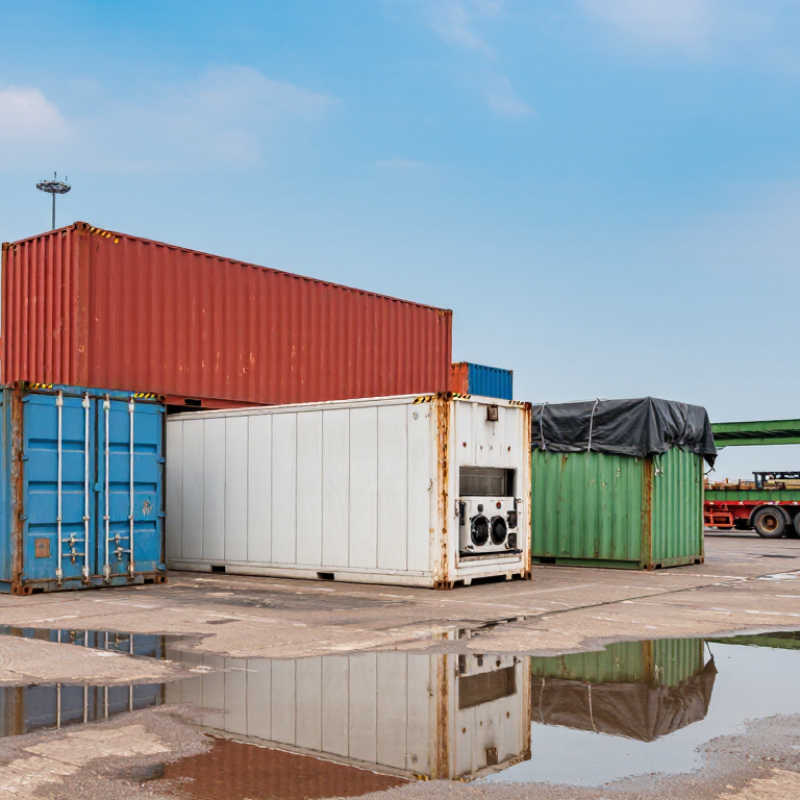
Refrigerated containers provide temperature-controlled transport, open-top containers support overhead loading, and flat racks are designed for oversized or heavy cargo.

How to Choose the Right Second Hand Container for Your Needs

Choosing a second hand shipping container starts with its intended use, not its lowest advertised price. A standard dry container works well for general cargo, tools, and temporary storage. A high cube offers extra height for bulky items. Open-top and flat rack containers suit oversized cargo, but they require careful loading plans and suitable lifting equipment. For temperature-sensitive goods, a used refrigerated container needs a tested cooling system, reliable insulation, and a clear maintenance record.

Inspect the container in person whenever possible. Check the roof for pinholes, the corner posts for twisting, and the floor for soft boards or chemical odors. Open every door and test the locking bars. Daylight entering through closed panels often reveals hidden leaks. Do not trust photos alone. Ask for the unit’s age, inspection history, dimensions, payload rating, and repair records. Local transport and placement rules may also affect your choice.

Budget for delivery, unloading, repainting, and minor repairs. A container with surface rust may remain practical, while deep corrosion around structural joints can create expensive problems. I have seen clean-looking units fail a simple water test. That was a useful reminder. A slightly older container with sound doors and a dry floor can be safer than a newer-looking unit with poor repairs. Choose condition, suitability, and documented history together.