

Choosing the best cargo storage containers is not simply a matter of selecting the largest steel box. The right choice depends on cargo type, handling frequency, climate, security needs, and available space. A dry container may protect boxed machinery, while a refrigerated unit may be essential for temperature-sensitive goods. Open-top and side-opening designs can also improve access, but they often require stronger planning and higher operating costs.
The scale of maritime logistics makes this decision important. UNCTAD’s Review of Maritime Transport reports that more than 80% of global merchandise trade by volume moves by sea. The World Bank’s Logistics Performance Index 2023 also emphasizes reliability, shipment tracking, and delivery timeliness. A container that is technically suitable may still create delays if inspections, loading equipment, or local transport connections are overlooked. Small details matter. Door clearance. Floor condition. Ventilation.
Maritime economist Martin Stopford has described shipping as “a derived demand,” reminding businesses that storage equipment must serve a wider supply chain. In practice, this means comparing cargo storage containers by lifecycle value, not purchase price alone. A used container may appear economical, yet corrosion, damaged seals, or uneven flooring can increase maintenance costs. Newer units usually offer better condition, but they may not fit every budget. There is no perfect universal container. That is the uncomfortable part. A careful assessment of cargo weight, dimensions, loading methods, weather exposure, and expected storage duration remains the most reliable starting point.
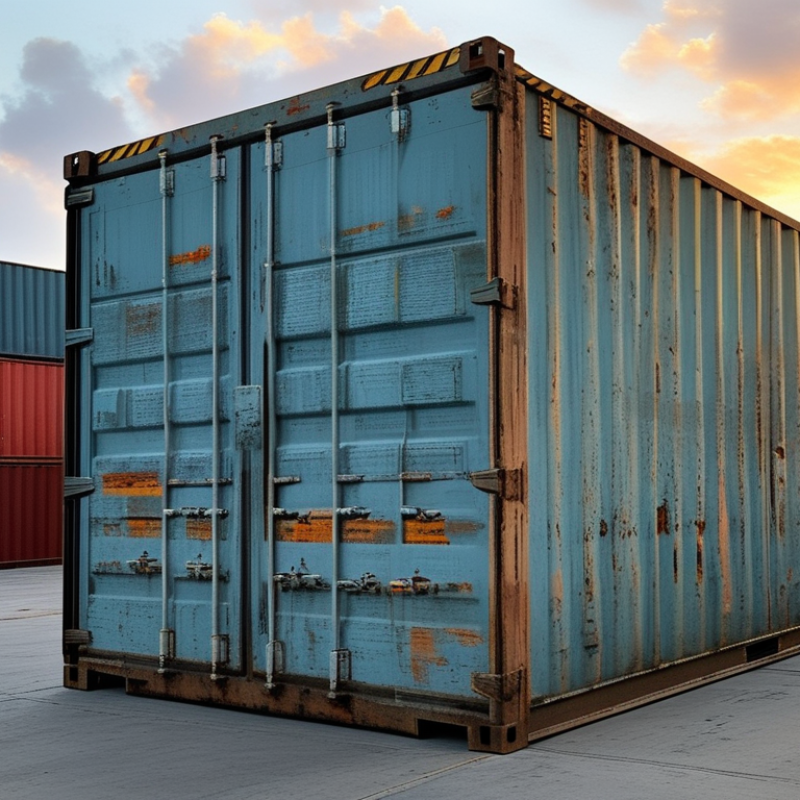
What Is the Best Type of Cargo Storage Containers?
ISO 668 defines the basic dimensions of widely used intermodal cargo containers. A standard 20-foot container measures about 6,058 millimeters long, 2,438 millimeters wide, and 2,591 millimeters high externally. The standard 40-foot version keeps the same width and height but extends to 12,192 millimeters. These dimensions support predictable handling across ships, rail networks, and road chassis. The term TEU reflects one 20-foot unit; a 40-foot container equals two TEUs.
Size is only part of the decision. A 20-foot container can suit dense cargo, machinery, or limited storage space because its floor area is smaller. A 40-foot container offers more usable volume for lighter, bulky goods. Internal measurements vary because wall thickness, door design, and structural equipment are not identical. Check the container’s rating plate, floor condition, door seals, and corner fittings before loading. Small defects matter.
UNCTAD’s Review of Maritime Transport 2024 reported global container ship capacity of approximately 30.5 million TEUs in 2024, showing how strongly standardized units support international logistics. Yet standardization does not remove operational judgment. A container may fit the schedule but fail the payload requirement. That mistake is common. ISO 668 dimensions should be treated as the starting point, while cargo density, loading method, ventilation, and available handling equipment determine the practical choice. Measurements should be verified on site, not assumed from a sales listing.
What Is the Best Type of Cargo Storage Containers?
When High-Cube Containers Add 12% More Internal Capacity
High-cube containers solve a common space problem. A typical 40-foot standard container offers about 67.7 cubic meters internally. A 40-foot high-cube unit provides approximately 76.3 cubic meters. The difference is close to 12.7%. Most of this gain comes from an extra 30 centimeters of internal height. That sounds modest. It can change the loading plan.
UNCTAD’s Review of Maritime Transport 2024 recorded global container port throughput at roughly 858 million TEUs in 2023. This scale makes efficient volume use increasingly important. In practical warehouse planning, high-cube units suit lightweight cartons, furniture, insulation, and tall palletized goods. They do not automatically support heavier cargo. Payload limits, floor strength, and container condition still matter.
The international CTU Code recommends careful weight distribution and cargo securing. Door height also affects usability. Some pallets may fit inside but fail at the doorway. This is easy to overlook. The 12% figure is not absolute, because corner posts, wall thickness, and cargo shape reduce usable space. A measured loading trial is safer than relying on brochure dimensions. I would also question whether extra height improves handling, or simply creates unused air above the cargo.
| Container Type | Approx. External Dimensions (L × W × H) |
Approx. Internal Dimensions (L × W × H) |
Internal Capacity | Capacity Gain vs. 40-Foot Standard | Typical Door Opening (W × H) |
Approx. Tare Weight | Best Suited For |
|---|---|---|---|---|---|---|---|
| 20-Foot Standard | 6.06 × 2.44 × 2.59 m | 5.90 × 2.35 × 2.39 m | About 33.1 m³ | −51.1% | 2.34 × 2.28 m | 2.2–2.4 t | Dense, heavy cargo and smaller shipments |
| 40-Foot Standard | 12.19 × 2.44 × 2.59 m | 12.03 × 2.35 × 2.39 m | About 67.7 m³ | Baseline | 2.34 × 2.28 m | 3.7–4.0 t | General-purpose cargo with balanced weight and volume |
| 40-Foot High-Cube | 12.19 × 2.44 × 2.90 m | 12.03 × 2.35 × 2.69 m | About 76.1 m³ | About +12.4% | 2.34 × 2.58 m | 3.8–4.2 t | Lightweight, bulky, tall, or volume-sensitive cargo |
| 45-Foot High-Cube | 13.72 × 2.44 × 2.90 m | 13.55 × 2.35 × 2.69 m | About 85.6 m³ | About +26.4% | 2.34 × 2.58 m | 4.6–4.9 t | Large-volume cargo when route and equipment availability allow |
Dimensions and capacities are approximate commonly used ISO container specifications. Actual measurements, tare weight, maximum payload, and allowable road weight can vary by container design, certification, and local regulations. The high-cube capacity comparison is calculated from approximate internal volume: 76.1 m³ ÷ 67.7 m³ − 1 ≈ 12.4%.
Dry van containers handle most general cargo shipments because they offer simple, enclosed protection. In my experience, they suit boxed goods, furniture, packaged equipment, and household supplies. Their solid walls block rain, dust, sunlight, and road spray during transport. A standard dry van also supports predictable loading plans. Forklifts can move pallets through wide rear doors. Interior tie points help reduce shifting when cargo needs extra support.
They work well across warehouses, trucks, rail systems, and ships. That flexibility reduces unnecessary transfers between different storage types. A clean, dry interior matters more than appearance. Before loading, experienced crews inspect the floor, roof, door seals, and odor level. Small defects can become expensive problems after a long journey. Moisture deserves special attention. Condensation may form when temperatures change, even inside a closed container. Desiccant materials and ventilation planning can help, depending on the cargo.
Dry vans are not perfect. They do not control temperature, so sensitive food, medicine, or delicate materials may need specialized equipment. They can also become difficult to unload when pallets are packed too tightly. I have found that a rushed loading plan often causes more trouble than the container itself. Weight distribution, labels, and clear access should be checked before the doors close. One overlooked corner can delay an entire shipment. That is why dry vans remain a practical choice, but only when the container and loading method match the cargo.
For temperature-sensitive cargo, refrigerated containers are often the most practical storage choice. They can maintain conditions between −25°C and +25°C, depending on the equipment and operating environment. This range supports frozen foods, fresh produce, medicines, and other controlled-temperature goods. However, the container is not the entire solution. Cargo type, packing density, airflow, and loading time all affect performance. A professional inspection should confirm the unit’s temperature capability before loading.
In daily operations, I have found that small details matter. Leave space between cartons and airflow channels. Pre-cool the container when the cargo requires it. Check the set point, return-air temperature, and actual cargo temperature separately. A digital data logger provides useful evidence during transport. Door openings should remain brief. Warm air enters quickly. Still, no refrigeration system is perfect. Sensors can drift, seals can weaken, and overloaded spaces may cool unevenly. These risks deserve regular review.
Tips: Confirm the required temperature range with the cargo’s handling instructions. Inspect door gaskets, drainage points, alarms, and power connections before use. Do not rely only on the display screen. Place calibrated sensors near the warmest and coldest areas. Record readings at loading, transfer, and delivery. If temperatures move outside the approved range, pause the process and investigate before continuing.
What Is the Best Type of Cargo Storage Containers?
How Open-Top, Flat-Rack, and Tank Containers Serve Specialized Freight
The best container depends on the cargo, not the container name. Open-top containers suit tall or heavy goods loaded by crane. Stone blocks, timber, and industrial parts may need this access. Their removable roof allows safer lifting. A strong tarpaulin then protects the load from rain and loose debris. Measure the cargo carefully. Small height errors can create expensive delays.
Flat-rack containers handle wide, long, or unusually shaped freight. They support machinery, pipes, and construction equipment with fixed or collapsible end walls. Proper weight distribution matters. Lashing points must match the cargo’s center of gravity and movement risks. Padding can prevent steel edges from damaging the frame. A common mistake is treating a flat-rack like a standard platform. It is not.
Tank containers are designed for approved liquids, powders, or temperature-sensitive materials. The tank must match the product’s properties, pressure requirements, and cleaning standards. Food-grade cargo demands strict hygiene checks. Non-food liquids still require verified compatibility and secure valve protection. Inspectors should record seals, fittings, surface condition, and temperature settings before departure. Small details matter. In practice, loading plans can look perfect but fail when access equipment or route limits are ignored. Rechecking those details is worthwhile, even when the schedule feels tight.
Representative 20-foot ISO container specifications
Payload capacity is only one factor when selecting a cargo container. Open-top containers are suitable for tall or top-loaded cargo, flat-rack containers are designed for oversized machinery and heavy project freight, while tank containers are used for bulk liquids and gases. Actual capacity varies by container design, tare weight, cargo density, and local transport regulations.
Values shown are representative approximate payload capacities for common 20-foot ISO container formats.