
News & Blogs

How to Choose the Right 40 Foot Container?

Choosing the right 40 foot container begins with cargo reality, not a product photograph. A standard unit usually offers about 67 cubic meters of internal space, while a 40-foot high-cube container provides greater usable height. That extra space can matter when loading cartons, furniture, machinery, or retail fixtures. It can also create wasted air if the cargo is dense and heavy.

UNCTAD’s Review of Maritime Transport reports that more than 80% of global merchandise trade by volume moves by sea. This scale explains why small selection errors can become expensive. A few centimeters may affect pallet placement. Poor weight distribution may cause handling problems. A container with corrosion, damaged door seals, or a weak floor may look cheap, but it can create delays and cargo risk. The Bureau International des Containers recommends checking identification, inspection records, and structural condition before use.

Industry analyst Lars Jensen has repeatedly emphasized a practical truth: “Container shipping is a network industry.” That observation applies directly here. The best 40 foot container must fit the cargo, transport route, handling equipment, and delivery schedule. It is not automatically the high-cube model.

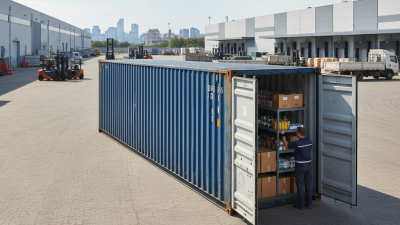
Consider the loading scene: forklift clearance, pallet height, door opening, ventilation, and moisture-sensitive goods. Also check whether the container is new, cargo-worthy, or wind-and-watertight. These terms are not interchangeable. I may sound cautious, but caution is useful. A perfect internal volume calculation can still fail when the last pallet cannot pass through the door. This guide examines dimensions, types, condition, cost, and route requirements before recommending a purchase or rental.

How to Choose the Right 40 Foot Container?

Understanding 40-Foot Container Types and Specifications

When choosing a 40-foot container, start with its type, not its advertised capacity. A standard dry container suits boxed, palletized, and general cargo. A high-cube model adds about 30 centimeters of interior height. That extra space helps with tall cartons, but it also changes loading plans. A refrigerated unit controls temperature and needs a reliable power supply. Open-top and flat-rack designs serve oversized cargo, yet they require careful securing and route planning. Measure twice.

A standard 40-foot unit is about 12.19 meters long externally, 2.44 meters wide, and 2.59 meters high. Internal dimensions are commonly near 12.03 by 2.35 meters, with roughly 2.39 meters of height. A high-cube container usually provides about 2.69 meters inside. Actual figures vary by construction and repair history. The door opening may be narrower than the interior width. Check the plate.

Payload is not simply internal volume. Many units show a maximum gross mass near 30,480 kilograms, including the container itself. The approved payload depends on tare weight, floor condition, and transport limits. Read the safety plate and shipping documents carefully. Inspect the floor for soft boards, the doors for weak hinges, and the seals for daylight gaps. Weight the cargo. A neat specification sheet can still mislead. It is easy to focus on height and overlook axle limits, ventilation, or door clearance. That mistake costs time during loading. Record measurements from the actual unit before booking.

Matching Container Capacity to Cargo Dimensions and Weight

Choosing a 40-foot container starts with cargo dimensions, not the container’s impressive volume. A standard unit offers about 67 cubic meters internally, while a high-cube version provides roughly 76 cubic meters. ISO 668:2020 lists a typical external length of 12.192 meters. Internal measurements vary by construction, so measure the actual cargo and door opening. Measure the awkward parts.

Weight is not volume. A 40-foot container commonly has a maximum gross mass of 30,480 kilograms under ISO specifications. Its tare weight often ranges from 3,700 to 4,000 kilograms, leaving approximately 26,500 kilograms for cargo. The certified CSC plate remains decisive. Do not guess. Check the container’s plate, carrier limits, road restrictions, and local axle rules before loading. Cargo should also sit evenly across the floor, with heavy items low and near the center. One dense machine can create a weight problem before the container looks full.

UNCTAD’s Review of Maritime Transport 2024 confirms that maritime shipping carries around 80% of global merchandise trade by volume, making efficient container planning commercially important. Drewry’s Container Census reports continued growth in the global container fleet, but availability does not remove loading risks. A practical calculation should include pallets, corner protection, ventilation gaps, and lashing space. The tempting shortcut is to divide cargo volume by 67. A rough estimate can still be wrong, especially with irregular crates or fragile equipment. Recheck the plan using a scaled layout and verified weights.

Evaluating Condition, Materials, and Required Features

How to Choose the Right 40 Foot Container?

Evaluating Condition, Materials, and Required Features

A 40-foot container can look sound from a distance. Inspection begins at the doors, roof, floor, and frame. Open both doors fully. Check whether the hinges move smoothly and the locking bars meet correctly. Daylight through roof seams signals possible water entry. Rust is not always a deal-breaker, but deep scaling around corner posts can weaken the structure. Ask for recent inspection records, repair details, and clear photographs. Do not rely on fresh paint alone. It can hide problems.

Material choice should match the intended use, location, and expected service life. Weathering steel handles outdoor exposure well, yet damaged coatings still need prompt treatment. Marine-grade plywood floors are common, but oil stains, soft spots, or swollen edges deserve close attention. For temperature-sensitive cargo, insulation and ventilation may matter more than appearance. A storage container needs different features from a workshop unit. Consider shelving, vents, electrical access, and internal partitions before delivery. Poor planning becomes expensive after placement.

Measure the access route, including gates, turning points, and overhead clearance. Ground conditions matter too. A level, reinforced base reduces door misalignment and floor stress. Confirm payload limits and dimensions through reliable documentation, not verbal estimates. I have seen buyers focus on a clean exterior and overlook bent underframes. That mistake is avoidable, though not every defect is obvious. If possible, inspect in daylight with a flashlight and moisture meter. Leave room for doubt. A careful second inspection can change the decision.

How to Choose the Right 40 Foot Container? - Evaluating Condition, Materials, and Required Features
Evaluation Category Container Option Typical Specification or Condition Best For Inspection and Selection Guidance
Overall Condition New or “One-Trip” Minimal prior use, clean interior, limited surface wear, and generally straight panels and doors. Long-term storage, repeated international shipping, sensitive cargo, and projects where appearance matters. Recommended
Confirm that doors, seals, locking bars, floor, and corner castings are fully operational.
Overall Condition Cargo-Worthy Used Previously used but structurally sound and suitable for continued transport under applicable inspection requirements. Regular freight movement and storage where moderate cosmetic wear is acceptable. Recommended
Check for water-tightness, sound welds, intact corner posts, and a serviceable floor.
Overall Condition Wind-and-Water-Tight Designed to keep out normal wind and rain, but may not meet cargo-transport certification requirements. Stationary storage, workshops, equipment protection, and non-export applications. Conditional
Use a light test to identify pinholes and inspect roof seams, door gaskets, and floor edges.
Size and Capacity 40-Foot Standard Height Typical external length is about 12.19 m; internal length is about 12.03 m. Internal width is about 2.35 m, with an internal height near 2.39 m. General cargo, pallets, machinery, furniture, and high-volume goods with standard height requirements. Recommended
Verify the supplier’s exact internal dimensions and door opening before planning the load.
Size and Capacity 40-Foot High Cube Provides approximately 30 cm more internal height than a standard-height unit; internal height is commonly about 2.69 m. Bulky or tall cargo, lightweight high-volume goods, and loads requiring additional vertical clearance. Recommended
Confirm transport height limits, usable door height, and the container’s maximum gross weight.
Construction Material Corten Steel Body Weathering steel panels and structural members are commonly used for strength and improved resistance to atmospheric corrosion. Outdoor storage, marine transport, construction materials, and demanding logistics environments. Recommended
Surface rust can be normal; reject units with deep pitting, perforation, cracked welds, or distorted structural members.
Floor Construction Marine-Grade Plywood Floor A typical dry-container floor uses hardwood plywood panels supported by steel cross-members and designed for heavy cargo loads. Palletized freight, machinery, packaged goods, and general cargo. Recommended
Look for soft spots, delamination, contamination, broken boards, protruding fasteners, and excessive deflection.
Door and Sealing Standard Cargo Doors End doors normally include locking bars, handles, hinges, cam retainers, and replaceable rubber gaskets. Most loading operations and goods requiring secure, weather-resistant enclosure. Recommended
Doors should open smoothly, close evenly, and compress the gasket continuously without visible gaps.
Ventilation Passive Ventilation Small protected vents allow limited air exchange while helping reduce condensation under suitable environmental conditions. Dry goods and general storage where active temperature or humidity control is not required. Conditional
Ventilation does not replace desiccants, moisture barriers, or climate control for humidity-sensitive cargo.
Security Locking Bar and Lockbox A lockbox shields the padlock from direct access, while locking bars secure the two cargo doors at multiple points. Valuable equipment, tools, inventory, and unattended outdoor storage. Recommended
Test all locking points and ensure the lockbox does not interfere with door operation or transport handling.
Special Requirements Side-Opening Configuration Includes additional side access doors, which can simplify loading long, wide, or difficult-to-reach items. Retail displays, construction materials, event equipment, and cargo requiring frequent side access. Specialist
Inspect the extra door seals, hinges, locking hardware, and surrounding frame for alignment and leakage.
Special Requirements Modified or Fitted Unit May include electrical wiring, shelving, personnel doors, windows, insulation, ventilation equipment, or internal partitions. Site offices, workshops, secure rooms, temporary facilities, and customized storage. Specialist
Review structural modifications, electrical safety, ventilation, drainage, fire protection, and local permit requirements.
Payload Planning Maximum Gross Weight Check The maximum gross weight is commonly around 30,480 kg, but the exact rating varies by unit and must include cargo, packaging, and container tare weight. Heavy machinery, dense materials, and international shipments requiring accurate load planning. Recommended
Use the safety plate and current shipping documents; also check road, rail, crane, and site limits.
Compliance Safety and Identification Plates A serviceable unit should have legible identification and safety information, including weight ratings and handling data. International transport, regulated logistics, and operations involving lifting or intermodal transfer. Recommended
Do not rely only on painted markings; verify current documentation and required inspection or certification status.

Dimensions and weight ratings are typical industry values and can vary by manufacturer, production year, configuration, and local regulations. Always confirm the container’s data plate, inspection records, internal dimensions, tare weight, and maximum gross weight before purchase or shipment.

Comparing Transport, Loading, and Storage Requirements

How to Choose the Right 40 Foot Container?

Comparing Transport, Loading, and Storage Requirements

A 40-foot container offers substantial capacity, but size alone should not guide the decision. Standard internal dimensions vary slightly by manufacturer and construction. Confirm usable length, width, height, door opening, tare weight, and maximum payload before booking transport. A loaded unit may exceed road or terminal weight limits, even when cargo fits comfortably inside. Route conditions matter too. Check bridge restrictions, chassis compatibility, turning space, and delivery access before the container leaves the depot.

Loading efficiency depends on cargo shape, packaging, and unloading order. Long cartons may use the floor well, while mixed pallets can create unused gaps. Keep heavy items low and distribute weight evenly across the floor. Leave enough clearance for doors, straps, inspection, and ventilation. A loading plan with measured carton dimensions is more reliable than visual estimates. Still, plans can fail when packaging changes. One extra pallet may force a costly rework.

Storage requirements deserve equal attention. A 40-foot container needs a firm, level surface and generous clearance around its doors. Consider drainage, wind exposure, temperature changes, and forklift access. Sensitive goods may need moisture control, liners, or regular inspections. For temporary storage, door orientation can affect daily labor more than container capacity. For long-term storage, floor condition and security procedures deserve careful review. More space is not always better. Sometimes a shorter container reduces handling, transport, and storage complications.

How to Choose the Right 40 Foot Container?

Comparing transport, loading, and storage requirements

A 40-foot high-cube container provides approximately 13% more internal volume and a taller door opening than a standard 40-foot dry container, making it suitable for bulky or tall cargo. The standard container offers nearly the same payload capacity and may be preferable when height clearance, depot availability, or transport restrictions are more important. Dimensions and payload figures are common ISO-based values; actual limits vary by container specification, tare weight, route, and local regulations.

Checking Regulations, Costs, and Supplier Reliability

Choosing a 40-foot container requires more than checking external dimensions. Confirm its internal volume, maximum payload, door opening, and CSC safety plate before signing. National customs rules may require accurate cargo descriptions, verified weights, and approved seals. The International Maritime Organization requires the Verified Gross Mass of packed containers before loading. A small weighing error can delay cargo or create extra handling charges.

Cost planning should include ocean freight, terminal fees, inland transport, documentation, insurance, storage, and possible inspection charges. UNCTAD’s Review of Maritime Transport 2024 reports that maritime trade grew 2.4% in 2023, while route disruptions continued to increase freight volatility. Prices can change quickly. Request a written quotation with validity dates and clearly stated exclusions. Supplier reliability needs evidence, not promises. Ask for recent inspection records, delivery timelines, container photos, and references from comparable shipments. The 2023 Container Port Performance Index assessed 405 ports, offering useful context for route and transit-risk checks.

Tips: Compare three written quotations. Check the container number against inspection photos. Confirm who pays detention charges. Use a payment schedule linked to verifiable milestones. A supplier with slow replies may still deliver well, but that uncertainty deserves a lower risk rating. I would also keep a small contingency budget; even careful estimates can miss local fees.