
Choosing a reefer shipping container in 2026 requires more than comparing rental prices. Cargo value, transit length, climate exposure, and port infrastructure all influence the correct choice. UNCTAD’s Review of Maritime Transport 2024 confirms that maritime shipping carries over 80% of global merchandise trade by volume. Temperature-controlled cargo depends heavily on this network. A small equipment failure can damage a full load of fruit, seafood, pharmaceuticals, or dairy products.
Drewry’s Reefer Shipping Annual Review and Forecast highlights continuing growth in perishable cargo movements, despite weather disruption, energy costs, and changing trade routes. This trend makes container performance increasingly important. Buyers should check the unit’s temperature range, cooling capacity, insulation condition, power consumption, and remote monitoring options. Ask for recent PTI records. Inspect the door seals closely. A worn gasket can quietly increase temperature variation and electricity use.
Reliability matters most.
The International Maritime Organization and industry operators increasingly emphasize efficient equipment, digital visibility, and lower emissions. However, newer technology is not automatically better. A smart reefer may provide real-time alerts, but weak connectivity can reduce its practical value at sea. I have found that specifications often look cleaner than operating reality. Therefore, this guide compares technical features, maintenance history, energy performance, and total ownership cost. It also considers the destination’s power supply and service capabilities. The best container is not always the newest model. It is the one that protects cargo consistently, records useful data, and remains supportable throughout the voyage.
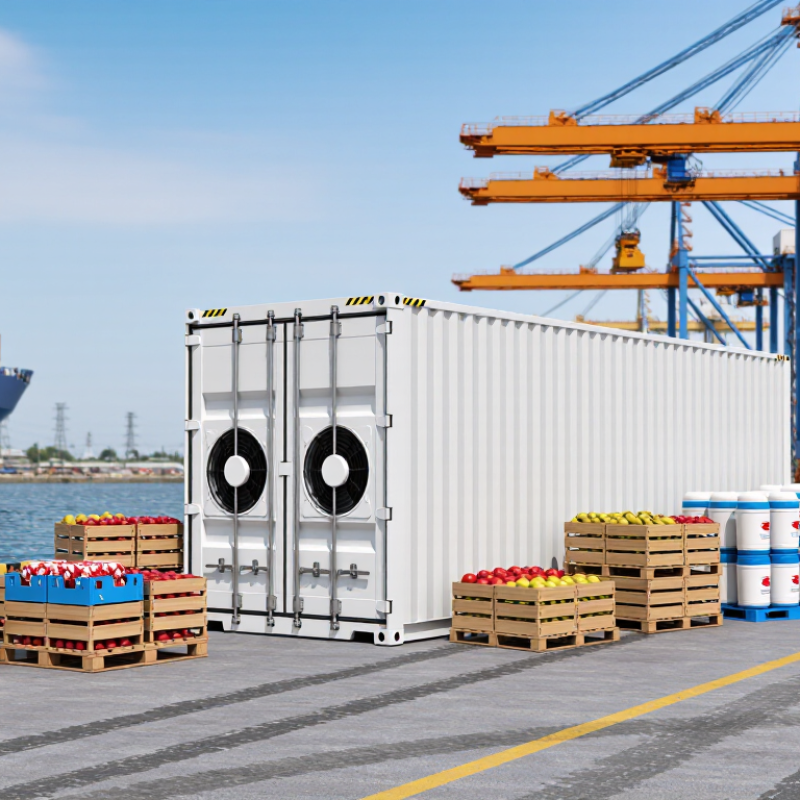
Reefer containers mainly fall into integral, clip-on, and controlled-atmosphere types. Integral reefers have built-in compressors, condensers, evaporators, and electric controllers. They suit most ocean shipments because the cooling unit travels with the cargo.
Clip-on units attach to insulated containers, but they require compatible power and careful inspection. Controlled-atmosphere models regulate oxygen and carbon dioxide for sensitive produce.
They are not simply colder boxes.
Cooling design matters more than the container’s age. Most modern units use vapor-compression refrigeration, with fans pushing chilled air beneath the cargo and through the T-floor.
Check airflow space, supply-air temperature, return-air readings, and temperature-recording accuracy.
The International Organization for Standardization’s ISO 1496-2 standard provides the testing framework for thermal containers. Drewry’s Reefer Shipping Annual Review and Forecast 2024 also identifies containerized reefer capacity as central to global perishable-cargo logistics.
Setpoint selection should follow the commodity, packaging, loading temperature, and route duration. A low setpoint is not a cure for warm cargo.
FAO’s The State of Food and Agriculture 2019 estimates that 14% of food is lost between harvest and wholesale. Reliable pre-cooling and uninterrupted power can reduce that exposure.
Yet real operations remain imperfect. Door openings, blocked vents, and uneven pallets still create warm pockets.
I would verify the data logger, inspect the gasket, and test the power connection before booking.
Fancy controls help, but disciplined loading helps more.
How to Choose a Reefer Shipping Container in 2026?
Match the container to your cargo, not just the booking schedule. Measure each pallet, including wrapping, corner guards, and ventilation space. A 20-foot reefer may suit compact, dense cargo. A 40-foot unit offers more floor length, but not unlimited payload. Check the container’s internal dimensions, tare weight, maximum gross weight, and available cubic capacity. These figures vary by equipment and carrier.
Leave air channels between the load and the walls. Do not block the evaporator outlet or return-air path. Fresh produce may need airflow more than extra volume. Frozen cartons often require tighter stacking, but crushed packaging can reduce circulation. Pre-cool the cargo when required. The container maintains temperature; it may not cool warm cargo safely. I have found that a slightly smaller, well-loaded container can protect cargo better than a half-empty oversized one. Still, this is not always practical.
Tips: Count pallets before booking. Sketch the loading pattern. Keep heavy cartons low. Confirm door clearance. Review the temperature range, ventilation setting, and power requirements with a qualified logistics provider. Build a small allowance for damaged pallets or uneven cartons. I once underestimated corner space by a few centimeters. That mistake delayed loading and forced a last-minute adjustment. Recheck the plan before dispatch.
| Reefer Container Size | Typical External Dimensions (L × W × H) |
Approx. Internal Dimensions (L × W × H) |
Approx. Internal Volume | Typical Payload Capacity | Approx. Euro Pallet Capacity (1,200 × 800 mm) |
Common Temperature Range | Best Cargo Match | Selection Considerations |
|---|---|---|---|---|---|---|---|---|
| 20 ft Standard Reefer | 6.06 × 2.44 × 2.59 m | 5.45 × 2.29 × 2.26 m | Approximately 28 m³ | Approximately 27,000–28,000 kg | Approximately 10–11 pallets | About −30°C to +30°C | Frozen seafood, meat, dairy products, berries, pharmaceuticals, and other compact or heavy cargo. | Suitable when cargo weight is reached before available volume. Leave space around the load for airflow and avoid blocking the evaporator outlet. |
| 40 ft High Cube Reefer | 12.19 × 2.44 × 2.90 m | 11.58 × 2.29 × 2.54 m | Approximately 67 m³ | Approximately 28,000–29,000 kg | Approximately 23–24 pallets | About −30°C to +30°C | Fresh produce, chilled meat, dairy, beverages, frozen foods, and mixed palletized shipments. | Offers a strong balance between volume and payload. Check the cargo’s cubic volume, pallet height, and maximum gross weight before booking. |
| 45 ft High Cube Reefer | 13.72 × 2.44 × 2.90 m | 13.10 × 2.29 × 2.54 m | Approximately 76 m³ | Approximately 28,000–29,000 kg | Approximately 26–27 pallets | About −30°C to +30°C | High-volume, relatively light cargo such as fruit, vegetables, flowers, chilled beverages, and retail food products. | Maximizes cubic capacity, but availability, route acceptance, terminal handling, and weight restrictions should be confirmed in advance. |
Note: Dimensions, payload, pallet capacity, and temperature performance are typical industry ranges and vary by equipment specification, insulation thickness, refrigeration unit, tare weight, cargo packaging, route regulations, and carrier requirements. Always confirm the equipment data sheet and maximum gross weight before shipment.
Temperature control should be judged beyond the setpoint. A container set at 2°C may still expose cargo to warm air during loading. Check its temperature recovery time after door opening. Confirm airflow with a loaded test, not an empty-container promise. The Sustainable Food Cold Chains report by UNEP and FAO estimates that inadequate cooling contributes significantly to global food loss. This makes stable circulation a commercial issue, not only a technical detail. Select units with calibrated supply and return sensors. Independent calibration records matter.
Monitoring should provide continuous readings, location data, and alarm history. Ask whether data remains available during signal loss. A delayed alert can turn a small deviation into rejected cargo. The International Energy Agency reports that cooling electricity demand could more than triple by 2050 without stronger efficiency action. Reefer efficiency therefore deserves a route-specific test. Compare kWh per day under the same ambient temperature, cargo load, and setpoint. A low quoted figure can mislead. I have seen “efficient” figures change sharply in humid weather.
Tips: Request a recent PTI record, sensor calibration certificate, and 24-hour energy log. Inspect door gaskets, drain paths, evaporator coils, and insulation damage. Set alarm limits around the cargo requirement, not merely the machine’s maximum range. Consider remote monitoring with independent verification. It costs more upfront. Sometimes, that is the safer mistake. Recheck the data after the first voyage, because real cargo rarely behaves like a test load.
Power compatibility is the first practical check. Confirm voltage, phase, frequency, plug type, and available amperage before booking transport. Many reefers require three-phase power, but specifications vary between units. A mismatch can damage equipment or interrupt temperature control. Ask for the container’s power plate and verify the vessel, terminal, and warehouse connections. If a generator is needed, check its continuous output, fuel plan, and alarm functions. I once saw a shipment delayed because the socket matched, but the frequency did not.
Condition affects both cargo protection and operating cost. Request recent temperature records and a valid pre-trip inspection report. Examine the door gasket for cracks, the floor for damage, and the insulation for damp areas. Inspect the evaporator, drain, condenser fins, and cable connections. Test the display, alarms, sensors, and defrost cycle. Small faults become expensive at sea. A clean interior matters too, especially when previous odors remain. Do not rely only on photographs; they often hide corrosion beneath the frame.
Compliance must be checked before loading. Review the CSC safety plate, inspection dates, calibration records, and required transport documents. Confirm that the unit meets current carrier, port, and destination requirements. Maintenance history should show regular servicing, refrigerant checks, sensor testing, and alarm verification. Ask who responds if the temperature rises overnight. Good answers include a named technician and a documented escalation process. My checklist is useful, but it is not perfect. Local requirements change, and experienced operators still need to verify details before departure.
How to Choose a Reefer Shipping Container in 2026?
Choosing a reefer container starts with the trade route, not the advertised daily rate. I have seen low rental quotes become expensive after repositioning, inspection, cleaning, and power connection fees. Purchase costs also include maintenance, insurance, certification, and storage between shipments. A container moving weekly may justify ownership. Seasonal cargo usually fits rental better. Calculate the full cost per voyage, including empty return transport.
Route conditions matter. A short port-to-port journey needs reliable temperature control and accurate data logging. Longer routes require stronger maintenance planning and accessible technical support at key ports. Ask suppliers about spare parts, emergency response times, remote monitoring, and technician availability. Confirm power compatibility before booking. A small mismatch can delay loading.
Tips: Request a written cost breakdown. Check the container’s service history and calibration records. Test the set-point before loading. Compare two route scenarios, including delays. Supplier support deserves careful questioning. Can they respond at night? Who handles a failed controller overseas? My early estimates were sometimes too optimistic because weather delays and port storage were ignored. Recheck those assumptions with recent route data, local handling charges, and your cargo’s actual temperature requirements. Industry standards help, but practical support often decides whether a shipment stays stable.
Rental vs. purchase planning costs across common reefer shipping routes
Usually reduces upfront capital requirements and is suitable for seasonal demand, trial routes, or short-term projects.
Can become more economical over several years when utilization is high and maintenance, certification, storage, and repositioning are controlled.
Confirm global depot coverage, emergency repair response, spare-parts availability, temperature monitoring, and pre-trip inspection procedures.
Planning estimates are shown in USD for a 40-foot high-cube reefer. Purchase cost is annualized over eight years and includes estimated inspection, maintenance, and certification expenses. Actual quotations vary by equipment age, season, route, port, cargo requirements, and contract terms.