
 عربي
 عربي
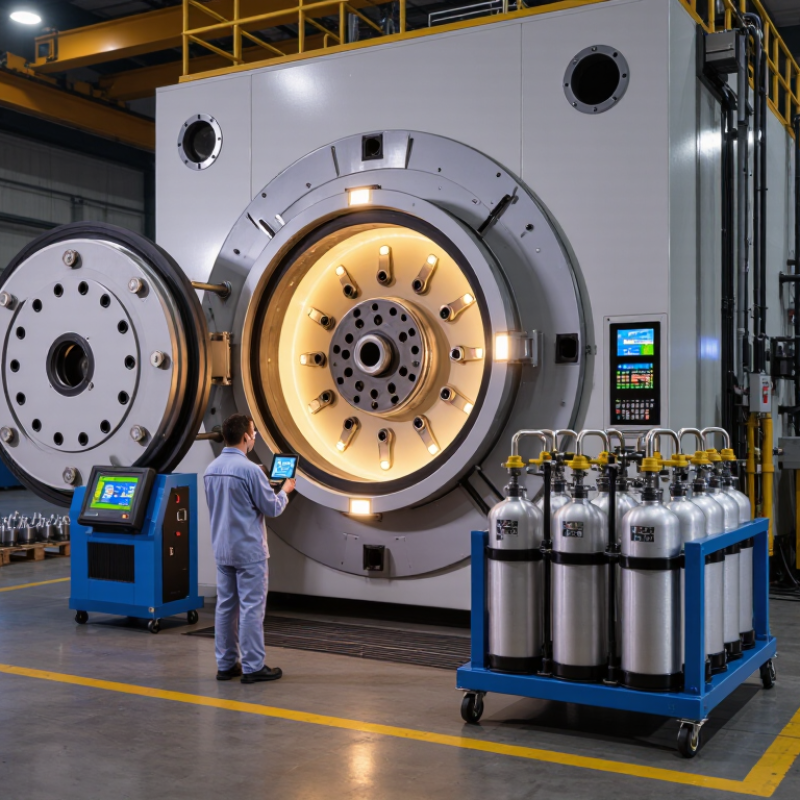
Top Vacuum Furnace Heat Treatment Manufacturers?
Achieving ±5°C temperature uniformity is not a matter of adding more heating power. Experienced manufacturers begin with furnace mapping. They place calibrated thermocouples throughout the hot zone, including corners, center, and near the door. Empty-chamber tests reveal cold spots. Loaded tests show how parts change heat flow.
The control system then balances multiple heating zones. Independent sensors detect small temperature differences, while tuned PID controls adjust power gradually. Careful insulation also matters. A dense graphite hot zone reduces radiant heat loss and limits temperature drift. Vacuum quality is checked because trapped gases can affect heat transfer and surface condition. Small details count.
Load design remains a practical challenge. Thick components heat slowly, while thin parts respond quickly. Skilled engineers use fixtures that maintain spacing and prevent shadowing.
They also record ramp rates, soak times, sensor positions, and calibration results for every qualified cycle. Traceable instruments support reliable production decisions.
The target is demanding. A poorly arranged load can exceed the limit. Even a well-mapped furnace may perform differently after maintenance, insulation wear, or thermocouple replacement. That is why responsible manufacturers repeat surveys at planned intervals and investigate unusual readings instead of hiding them. Some results will be imperfect. The useful response is correction, not optimistic paperwork.