


News & Blogs

Who Are the Top Candy Machine Manufacturers in China?

Choosing a candy production line is a practical decision, not just a search for the lowest price. China has a broad manufacturing base, with suppliers serving small workshops and large confectionery plants. The phrase Candy Machine Manufacturers covers a varied field: some companies build complete production lines, while others specialize in mixers, depositors, cooling tunnels, or packaging equipment. That distinction matters.

A product photograph can look convincing. The real test comes from machine performance, build quality, and support after installation. Buyers should compare stainless-steel contact surfaces, production capacity, temperature controls, cleaning access, and the availability of spare parts. Ask for equipment specifications, factory references, and a live or recorded production demonstration. Small details matter.

This guide introduces leading Chinese manufacturers and explains how to assess their strengths. It considers product range, customization, technical support, and documented quality practices, rather than relying on promotional claims alone. A supplier may be a strong fit for hard candy but less suitable for gummy production. Needs differ. Readers should confirm certifications and performance claims directly with each company, since product lines and service arrangements can change. Even a careful comparison has limits: published information may not reveal response times or workmanship on a busy factory floor. Treat this overview as a starting point, then verify the details against your recipe, output goals, budget, and installation plans.
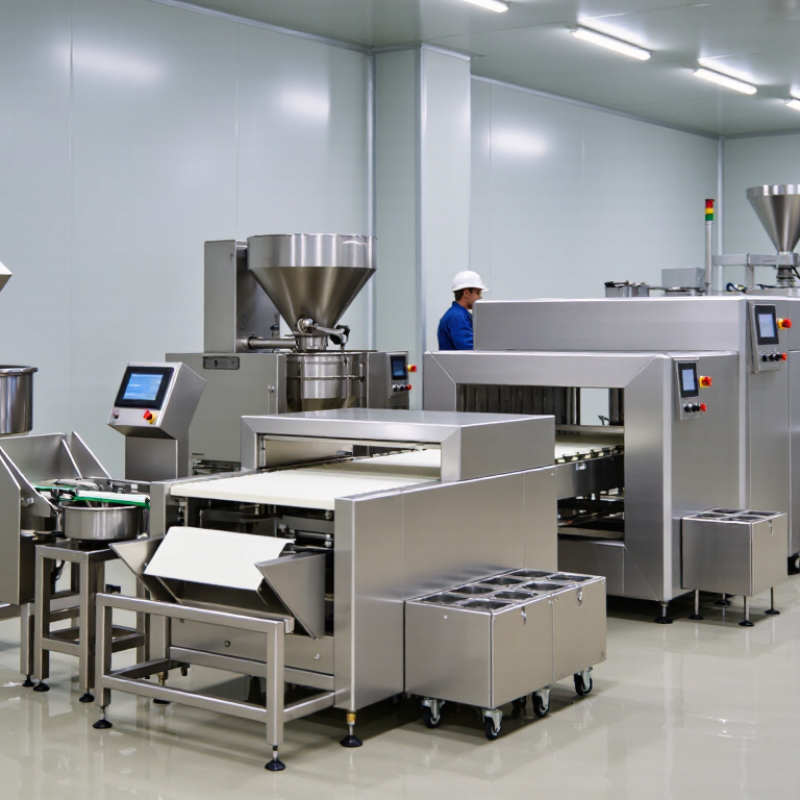
Who Are the Top Candy Machine Manufacturers in China?

What Is a Candy Machine Manufacturer in China?

A candy machine manufacturer in China is a company that designs and builds equipment for making confectionery. Its work may cover cooking, mixing, depositing, forming, cooling, and packaging. A real production line is more than a polished machine: operators need stable temperatures, cleanable contact surfaces, and settings they can adjust between batches. Small details matter. A depositor that struggles with a thicker syrup can cause uneven pieces and extra waste.

The market context is substantial. Grand View Research’s Confectionery Market Size report valued the global confectionery market at about US$233.2 billion in 2023 and projected 4.7% annual growth from 2024 to 2030. That estimate describes confectionery sales, not machinery demand, but it helps explain manufacturers’ need for adaptable production capacity. When assessing a Chinese supplier, ask for machine specifications, material details, output ranges, and test records using your actual recipe. Request a factory acceptance test, too. A brochure may show a neat line; it may not reveal changeover time, cleaning effort, or performance with a sticky mixture. I would treat claimed output as a starting point, not a promise. Verify it under comparable operating conditions.

How Has China’s Candy Machinery Industry Developed?

China’s candy machinery industry has changed alongside the country’s broader food-processing sector. Earlier equipment often focused on basic cooking, forming, and cutting. Many newer production lines combine temperature control, depositing, cooling, and packaging in a more continuous workflow. The shift is visible on factory floors: stainless-steel frames, digital control panels, and enclosed conveyors are now common features.

Manufacturing capabilities have also expanded through a dense network of component suppliers and engineering workshops. This ecosystem can support equipment for hard candy, gummies, chocolate, and other confectionery products. Some systems offer recipe storage and adjustable settings, helping operators manage batch changes with less manual recalibration. Still, automation is not a magic fix. Product consistency depends on ingredient handling, accurate temperature readings, and trained staff.

Development remains uneven. A well-finished machine may still need careful commissioning, and after-sales support can vary between suppliers. Buyers often assess spare-part access, cleaning procedures, and test runs using their own recipes—not just the control screen. Small details matter. A sticky deposit nozzle or unstable cooling tunnel can slow an entire line. China’s industry has grown more technically capable, but practical performance still deserves close inspection.

Who Are the Top Candy Machine Manufacturers in China? - How Has China’s Candy Machinery Industry Developed?

Area Typical Equipment or Development Role in Candy Production Practical Considerations
Industry structure China’s candy machinery sector includes suppliers focused on individual machines as well as suppliers offering integrated production lines. Equipment can cover preparation, cooking, forming, cooling, and packaging, with the level of integration varying by project. Compare suppliers by the specific processes they can engineer and support; this overview does not rank or identify individual companies.
Hard candy Common equipment includes sugar cookers, batch rollers, rope sizers, forming machines, depositors, and cooling conveyors. Depending on the product, candy may be formed by depositing cooked syrup into moulds or by sizing and shaping a candy rope. Confirm that the proposed process suits the recipe, piece shape, dimensions, and required production rate.
Gummies and jellies Typical systems combine cooking and mixing equipment with depositing and setting equipment. Starch-mould and starchless depositing systems are both used. Depositing equipment portions the cooked mixture into moulds; the setting and demoulding method depends on the line design and product. Ask about recipe handling, mould changeover, cleaning access, and controls for dosing and deposit weight.
Chocolate products Common machinery includes chocolate melting and tempering equipment, moulding lines, enrobers, and cooling tunnels. Tempering prepares chocolate for forming or coating; moulding and enrobing produce different product styles. Line configuration depends on whether the product is moulded, coated, or made using both processes.
Packaging Packaging equipment may include product feeders, candy wrappers, bagging machines, and cartoning equipment. Packaging protects finished products and prepares them for storage, transport, and retail presentation. Check compatibility with the product’s shape, wrapping material, pack format, and upstream line speed.
Industry development The sector has expanded from supplying individual process machines to offering more automated and connected line configurations. Integrated lines can coordinate stages such as forming, conveying, cooling, and packaging, reducing the need for separate manual transfers. Automation level and integration are project-specific; confirm which stages are included in the supplier’s scope.
Controls and customization Modern equipment commonly uses electric drives and electronic controls; configurations can be adapted for different products and line layouts. Controls help operators manage machine settings and coordinate production steps. Review control functions, recipe changeover, operator training, documentation, and availability of replacement parts.
Supplier evaluation Relevant comparison points include process coverage, stated capacity, material specifications, sanitation design, testing, installation, and service support. These factors help determine whether machinery is suitable for a particular product and factory. Request a written specification and confirm applicable food-contact and market-entry requirements for the destination country.

Which Companies Are Among China’s Leading Manufacturers?

China’s leading candy-machine manufacturers are best understood by their production strengths, rather than by a single ranking. The leading group typically includes factories that build complete lines for cooking, depositing, cooling, wrapping, and inspection. Others focus on one stage, such as precision depositors for gummies or compact chocolate moulding systems. Statista’s 2024 market outlook estimated China’s confectionery revenue at roughly US$20 billion, indicating a substantial domestic market for production equipment. Market size alone, however, does not prove a machine maker is reliable.

Look for manufacturers with documented export experience, test records, and a workshop where buyers can see a line run. A useful trial follows the product from heated syrup through depositing and cooling; check weight variation, changeover time, and cleaning access. Ask for capacity figures under stated product conditions, not just a maximum-speed claim. The China Food and Packaging Machinery Industry Association’s industry materials describe growing attention to automation and product quality, but these trends do not make every supplier equally capable. Details matter. A modest machine may suit a small confectionery plant better than a high-speed line. And honestly, published specifications can leave out awkward changeover delays; request a sample run and written acceptance criteria before comparing suppliers.

What Types of Candy-Making Machines Do They Produce?

Candy-making equipment manufacturers in China produce machines for both small workshops and continuous factory lines. Their catalogs often cover cooking, forming, cooling, and packaging. The exact range varies by supplier.

Hard-candy lines typically combine syrup cooking with depositing or stamping equipment. Depositors portion hot candy into shaped molds, while stamping machines form pieces from a heated candy rope. Gummy systems cook a gelatin or pectin mixture, then deposit it into starch or silicone molds. The texture depends on the recipe, temperature, and drying time—not just the machine.

Lollipop equipment can form the candy and insert sticks, while caramel and toffee lines use controlled cooking and pulling stages. Some manufacturers also build chocolate tempering, molding, and enrobing machines. Look closely at cleaning access, temperature controls, and changeover time. A brochure rarely shows how awkward a mold change can feel during a busy shift. Ask for a product trial using your own recipe; sample output can reveal uneven weights or slow cooling. A highly automated line is not always the right fit.

How Can Buyers Compare Chinese Candy Machine Manufacturers?

Comparing Chinese candy machine manufacturers takes more than matching prices and output figures. Ask each supplier for a line layout, product samples, and a recorded trial using your recipe. Watch the feeder, forming rollers, cooling tunnel, and cutter during a continuous run. Small details matter. Does sugar cling to the rollers, or do pieces leave the belt evenly?

Request the stainless-steel grades used for product-contact parts, cleaning instructions, and a list of included tooling. Compare capacity using the same candy size, recipe, and working hours; headline speeds can mislead. Check whether electrical drawings, manuals, and spare-part codes are available in English. Ask how quickly technicians respond and whether remote support includes video diagnosis. Promises sound good.

Before paying a deposit, confirm the machine’s dimensions, power needs, installation scope, warranty exclusions, and acceptance-test criteria in writing. Speak with recent overseas buyers if possible, and verify certificates against the exact model, not just a brochure. Price comparisons are imperfect: one offer may include molds and commissioning, while another leaves them out. That difference can change the real cost.