
 عربي
 عربي
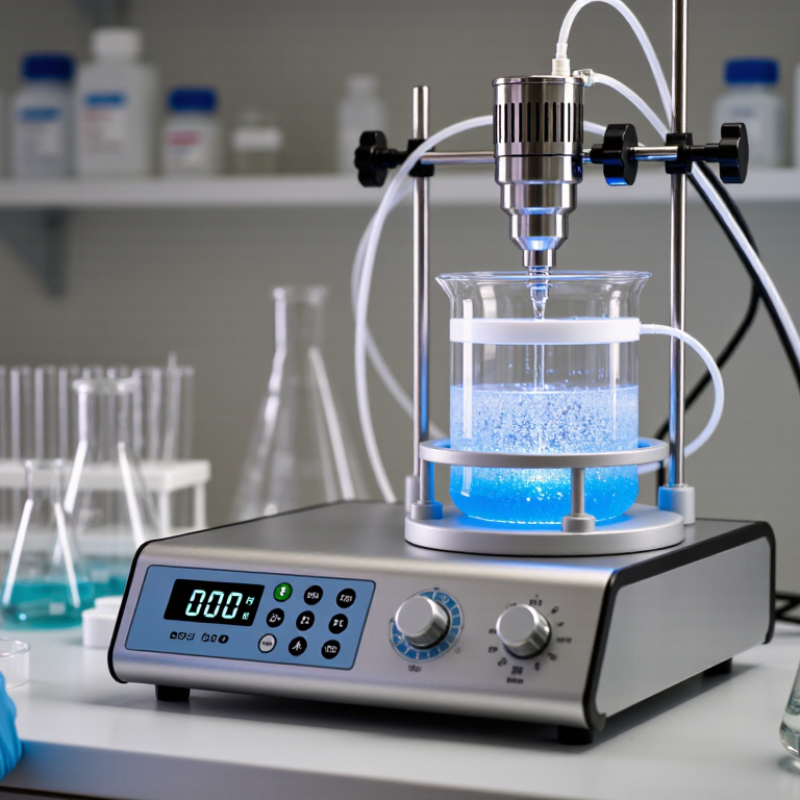
A 20 kHz probe and a 40 kHz bath deliver energy differently. A probe concentrates vibration at its tip, making it useful for breaking stubborn agglomerates in a beaker. A bath spreads sound through the tank, which can suit several small vessels or delicate samples. Chemat and colleagues’ review in Ultrasonics Sonochemistry (2011) describes power ultrasound as commonly operating from 20 to 100 kHz. Both frequencies fall within that range, but frequency alone cannot predict dispersion quality.
The difference is practical. Lower-frequency systems often produce more forceful cavitation, while a 40 kHz bath may provide gentler, broader treatment. Yet vessel shape, sample volume, viscosity, and delivered power can change the result. Suslick’s Science review (1990) reports that cavitation hot spots can briefly reach about 5,000 K and 1,000 atmospheres; these are microscopic, transient conditions, not the bulk sample temperature or pressure. Do not read those figures as a guarantee of performance.
For a probe, watch for a narrow plume, splashing, and local heating. For a bath, check whether the vessel sits in an active zone and whether the liquid level is consistent. I would not choose by frequency alone. That shortcut is tempting, but incomplete. Test a small batch and record treatment time, temperature, and particle-size change.