


News & Blogs

7 Tips to Choose a Chocolate Bar Production Line

Choosing a Chocolate Bar Production Line is a technical decision, not merely a purchasing exercise. A modern line must balance output, product quality, hygiene, energy use, and future flexibility. Grand View Research estimated the global chocolate market at approximately USD 127.88 billion in 2023, with continued growth expected through 2030. That growth increases pressure on manufacturers to produce consistent bars at competitive costs.

Small details matter.

A few degrees during tempering can affect gloss, snap, and shelf stability. Cooling tunnels must control temperature and airflow without creating condensation. Depositors, moulds, conveyors, and wrapping systems must also work as one coordinated process. This article presents seven practical tips for evaluating equipment, including capacity planning, chocolate tempering, cooling performance, automation, sanitation, packaging compatibility, and after-sales support. These areas reflect common concerns identified in food-processing guidance from PMMI and hygiene principles associated with ISO 22000 and EHEDG.

The right choice depends on your product, not a supplier’s brochure. A high-speed line may waste money if demand remains seasonal. An inexpensive machine may create hidden costs through chocolate losses, difficult cleaning, or frequent downtime. Factory teams should request trial production, inspect contact surfaces, measure changeover time, and review spare-parts availability. Ask uncomfortable questions. They reveal weak assumptions.

Market forecasts can guide investment, but they cannot replace plant-specific testing. Cocoa viscosity, bar size, inclusions, climate, labour skills, and available floor space all influence performance. Careful comparison creates a stronger purchasing decision and leaves room for honest reassessment before installation.
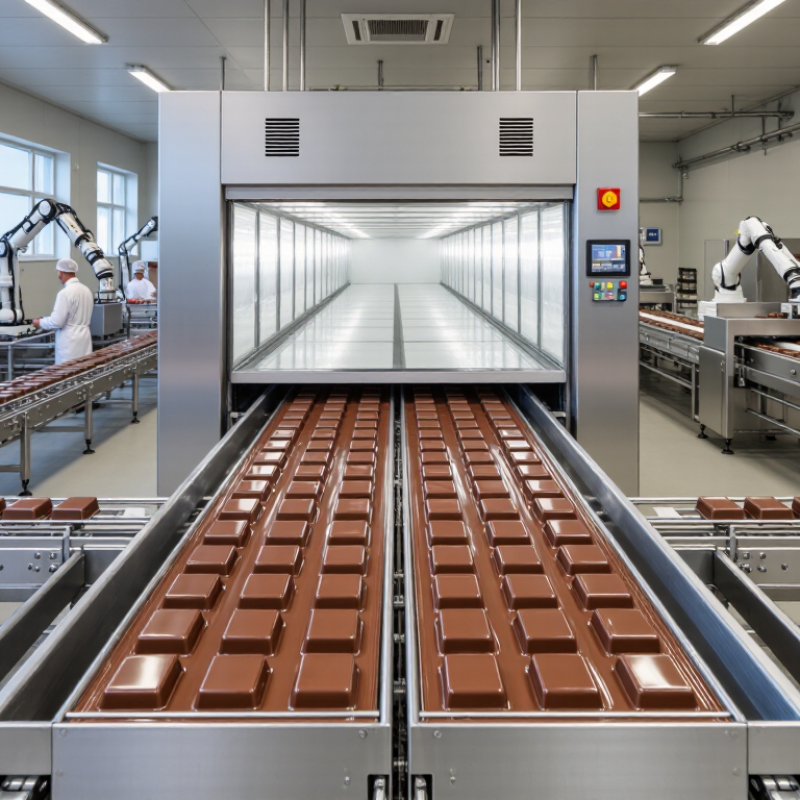
7 Tips to Choose a Chocolate Bar Production Line

Define Your Chocolate Product and Production Goals

Before selecting a chocolate bar production line, define exactly what you plan to sell. A molded milk chocolate bar needs different equipment from a filled, layered, or nut-containing bar. Specify the recipe, bar weight, dimensions, surface finish, and ingredients. Start with the product.

Your production goals should include daily output, working hours, labor availability, and expected growth. For example, a target of 2,000 bars per hour requires a different line configuration from 10,000 bars per hour. Consider tempering accuracy, depositing capacity, cooling time, demolding performance, and packaging speed. These stages must work together. A fast depositor cannot compensate for slow cooling tunnels.

Product consistency matters more than impressive machine speed. Record the required chocolate temperature, viscosity range, and cooling conditions. If your recipe includes almonds, crisp pieces, or soft fillings, confirm that the equipment can handle them without blockages or uneven distribution. Also examine cleaning access and changeover time. These details affect real operating costs.

Leave room for controlled testing. A line designed only for one bar size may limit future products. However, excessive flexibility can increase complexity and maintenance. This is where many plans become unrealistic. A smaller pilot line may reveal coating problems, packaging waste, or unstable textures before major investment. Review production data, not assumptions, and revise the equipment specification when actual trials disagree with the original plan.

Evaluate Production Capacity and Equipment Configuration

Choosing a Chocolate Bar Production Line

Evaluate Production Capacity and Equipment Configuration

Tip: Define your real output before comparing equipment. A line rated at 1,000 kilograms per hour may not deliver that volume continuously. Measure daily demand, product weight, working hours, and seasonal peaks. Allow space for cleaning, flavor changes, minor stoppages, and rejected bars. A useful calculation includes a 10–15% operating buffer. It feels conservative, but production rarely runs perfectly.

Tip: Match every machine to the same capacity range. The tempering unit, depositor, cooling tunnel, mold changer, and packaging system must work together. One slow machine creates a visible queue. One oversized machine increases energy use and idle time. Check chocolate viscosity, bar thickness, cooling temperature, and belt speed during technical discussions. Ask for test data using your actual recipe, not only standard samples.

Tip: Inspect the complete equipment configuration, including storage tanks, pumps, conveyors, control systems, and cleaning access. Operators need clear viewing panels and safe working space around the line. A narrow maintenance area can turn a simple nozzle change into hours of downtime. Utility demand also matters. Confirm electrical load, compressed air quality, chilled water, drainage, and ventilation before installation. I have seen planning focus too heavily on headline speed. That mistake becomes expensive later. Leave room for future molds, packaging changes, and better inspection tools.

Check Processing Precision, Hygiene, and Safety Standards

Choosing a chocolate bar production line requires more than comparing hourly output. Check how precisely it controls tempering temperature, depositing weight, cooling time, and molding pressure. A small temperature drift can create dull surfaces, weak snaps, or unstable texture. Ask for test samples using your actual chocolate recipe. Measure each bar, inspect its gloss, and record cooling results. Brochures often look perfect. Production rarely does.

Hygiene must be visible in the machine’s design. Choose smooth food-contact surfaces, sealed bearings, accessible inspection points, and tool-free cleaning areas where possible. Check whether operators can remove chocolate buildup from nozzles and conveyors without hidden corners. Review cleaning instructions, sanitation records, and material certificates. Ask how quickly the line dries after washing. Moisture left behind can damage quality. This detail is easy to overlook.

Safety standards deserve the same attention as speed. Look for guarded moving parts, emergency stops, clear alarms, and interlocked access doors. Controls should show faults in plain language, not confusing codes alone. Request documented risk assessments, electrical checks, and operator training records. During a factory visit, watch how workers move around the line. A technically compliant system may still encourage awkward habits. I would also test a restart after an emergency stop. If the process resumes unexpectedly, reject the design. Leave room for honest improvement, because even a well-engineered line can expose maintenance weaknesses over time.

Compare Energy Efficiency, Automation, and Maintenance Needs

7 Tips to Choose a Chocolate Bar Production Line

Compare the line’s energy use during heating, cooling, tempering, and idle periods.

Tip 1: Request measured consumption per production hour, not only advertised capacity.

Tip 2: Check whether motors, pumps, and heaters adjust automatically when demand changes.

This reduces wasted electricity during short pauses. In my experience, small standby losses become expensive across long shifts. Review insulation around tanks and heated pipes. Poor insulation quietly increases energy demand.

Tip 3: Choose equipment with heat recovery options when warm air or water is discharged.

Automation should improve consistency without making operators helpless.

Tip 4: Examine temperature sensors, product tracking, and alarm records during a live demonstration.

Clear controls matter. A complicated screen may impress visitors but slow production later.

Tip 5: Confirm that recipes, speed settings, and cleaning cycles can be stored safely.

However, do not automate every decision. Chocolate can react differently to room temperature, particle size, and seasonal humidity.

Maintenance needs deserve equal attention.

Tip 6: Inspect access panels, lubrication points, belts, pumps, and cooling surfaces before purchase.

If technicians need special tools for routine work, delays may grow.

Tip 7: Ask for spare-part availability, service response times, and preventive maintenance schedules.

Reliable suppliers provide manuals with practical intervals, not vague promises. I would also calculate cleaning time between products. This is often overlooked.

A line may use less energy but lose valuable hours during difficult changeovers. Keep that trade-off visible.

Assess Supplier Support, Budget, and Future Expansion Options

7 Tips to Choose a Chocolate Bar Production Line

Tip 1: Audit supplier support before comparing prices. Ask for commissioning procedures, operator training, response times, and local spare-parts coverage. Tip 2: Request evidence from similar chocolate bar projects. Factory acceptance testing should confirm tempering accuracy, mould filling, cooling performance, and packaging speed. PMMI’s 2024 automation research highlights service access and workforce readiness as practical factors in equipment investment. Technical support is not optional.

Tip 3: Build a total-cost budget. Include installation, utilities, mould changes, cleaning, maintenance, training, and energy consumption. A cheaper line may require expensive manual work later. Tip 4: Leave contingency funds. A realistic reserve should cover unexpected electrical work, transport delays, and additional tooling. Tip 5: Compare lifecycle costs, not only the purchase quotation. The International Cocoa Organization’s 2023/24 report estimated a cocoa production deficit of about 439,000 tonnes. Raw-material volatility makes waste reduction and stable process control financially important.

Tip 6: Check future expansion options. A modular line should allow extra moulds, a longer cooling tunnel, faster depositing, or another packaging lane. Confirm available floor space, electrical capacity, compressed-air demand, and software compatibility. Tip 7: Ask whether the supplier can upgrade controls without replacing the entire line. This detail is often missed. Personally, I would challenge optimistic output figures and test them using the planned recipe, bar size, and changeover schedule. A machine’s brochure speed can look excellent, yet real production may slow during cleaning, flavour changes, or seasonal staffing gaps.

7 Tips to Choose a Chocolate Bar Production Line

Recommended evaluation weights for comparing chocolate bar production lines, with emphasis on supplier support, budget control, and future expansion.

Use these percentages as a practical procurement scorecard. Higher-weight criteria can have a greater influence on the final supplier and equipment decision.