
 عربي
عربي عربي
عربي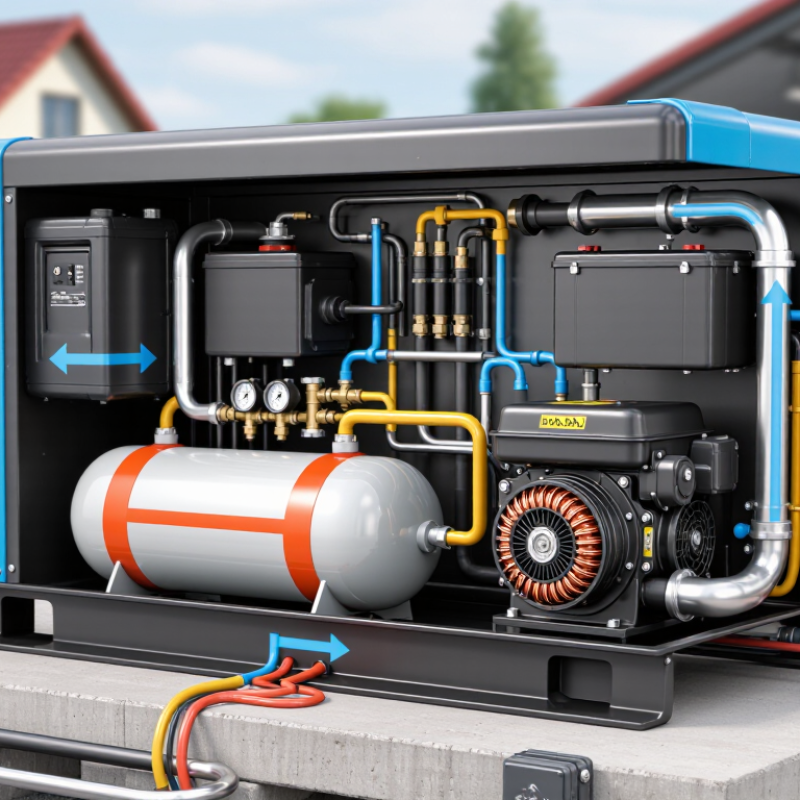
What Is an LPG Generator and How Does It Work?
How LPG Fuel Powers the Engine
An LPG generator uses liquefied petroleum gas, usually propane or butane, to create mechanical power. The fuel stays liquid inside a pressurized cylinder or tank. When the valve opens, a regulator reduces its pressure and allows the LPG to vaporize. The engine then receives the gas through a mixer or fuel-injection system.
The engine draws air through its intake. LPG combines with this air in a controlled ratio. A spark plug ignites the mixture inside the cylinder, producing expanding gases that push the piston downward. This movement turns the crankshaft. The crankshaft drives an alternator, which converts rotation into electrical power. It sounds simple.
In practical use, the regulator and governor must respond to changing electrical loads. A refrigerator starting, for example, may briefly demand more fuel than a lamp. If the mixture or pressure is incorrect, the engine can run roughly, lose power, or stall. Cold conditions can also slow LPG vaporization, especially when the tank is small.
LPG combustion generally produces fewer particulates than many liquid fuels, but it still creates carbon monoxide and carbon dioxide. Safe ventilation is essential. Installations should follow local requirements and be checked by qualified technicians. LPG has an odorant to help reveal leaks, yet smell alone is not a complete safety system. Real-world performance depends on maintenance, fuel quality, temperature, and careful setup.