


News & Blogs

How to Choose Vacuum Insulated Panels for Walls in 2026?

Choosing Vacuum Insulated Panels For Walls in 2026 starts with the wall itself, not a product brochure. Climate, available space, framing, and the building’s moisture strategy all affect whether a panel is suitable. Vacuum insulation can provide strong thermal resistance in a relatively thin profile, but performance depends on the complete wall assembly. A panel’s laboratory rating does not automatically describe how the finished wall will perform.

Small details matter. Compare declared thermal performance, dimensions, edge conditions, facing materials, and installation requirements. Check whether product data reflects the panel’s age and expected service conditions; the vacuum barrier can be vulnerable to punctures during handling or construction. Ask suppliers how damaged panels are identified and replaced. Also confirm compatibility with the chosen cladding, air-control layers, and fire-safety design. A low quoted price may not include careful packaging, specialist installation, or replacement panels. That matters.

Before selecting a system, review project drawings with a qualified building professional and request current technical documentation from the manufacturer. Consider thermal bridges at joints, corners, windows, and fixings, since these can reduce whole-wall performance. Installation quality is not a footnote. It is part of the insulation strategy. This guide will help compare the practical trade-offs, questions, and evidence behind different options. No panel suits every wall. A careful decision may still involve compromises, and it is worth recording why a chosen solution fits the project.
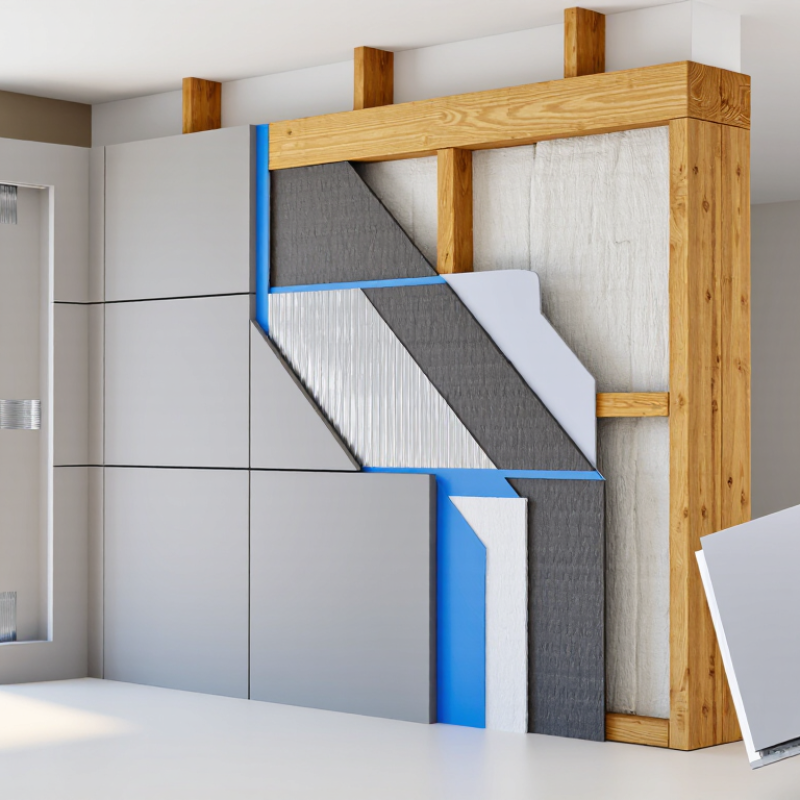
How to Choose Vacuum Insulated Panels for Walls in 2026?

Define the Wall’s Thermal and Structural Requirements

Begin with the wall’s performance target, not the panel thickness. Identify the required U-value or R-value for the whole assembly, then account for climate, framing, windows, and junctions. A panel’s center value can look reassuring. Edges and joints may still create heat-loss paths.

Next, define what the wall must physically support. Note cladding weight, wind pressure, impact exposure, and fixing locations. Vacuum insulated panels are not automatically structural elements. Confirm documented pressure limits and support details with the supplier and project engineer. Keep fasteners clear of the panel core; one puncture can sharply reduce its insulating performance. Small detail. Big consequence.

Check practical constraints before choosing a panel size. Measure cavity depth, corners, and openings carefully, since panels are difficult to cut on site. Review edge details, installation tolerances, and how the assembly controls moisture and condensation. Request aged thermal-performance data, not just a best-case center value. A neat spreadsheet can still miss a cold bridge at a window reveal. I would pause there, even if the schedule feels tight.

Compare Panel Performance, Dimensions, and Core Materials

For wall insulation, compare the stated thermal conductivity, panel thickness, and expected performance over time. A low center-panel value can look impressive, but joints and edges may reduce the wall’s overall thermal resistance. Check whether product data describes the panel itself or the complete assembly. Small details matter.

Dimensions should match the wall layout, framing, and openings. Measure around windows, electrical boxes, and corners before specifying panel sizes. Vacuum insulated panels generally should not be cut or punctured, so a few awkward gaps can complicate installation. Measure twice. Review the installation details and required clearances with the project team, especially where panels meet studs or fasteners.

Core materials affect handling and performance. Fumed silica cores are common and can retain useful insulation performance, while glass-fiber cores may offer different cost and thickness trade-offs. Compare published data under consistent test conditions, and ask how aging, edge effects, and vacuum loss are addressed. The thinnest option is not automatically the best fit. I would also question any specification that ignores repairs or replacement: once a panel is damaged, its performance can fall sharply, and that practical limitation deserves space in the design discussion.

Check Compatibility with Wall Assemblies and Installation Methods

Before choosing vacuum insulated panels for a wall, compare their dimensions and thickness with the full wall assembly. Check the framing depth, sheathing, air and water-control layers, and planned cladding. A panel that fits the drawing may still clash with a bracket or uneven masonry on site. Measure carefully.

Installation details matter because a puncture can compromise a panel’s insulation performance. Confirm how panels will be held in place, and keep screws, service runs, and cutting tools away from their sealed faces. Use only attachment methods approved for the panel system. Plan around windows, corners, and wall penetrations, where small gaps can create thermal bridges. No field trimming. If a panel needs an unusual cut, pause and check the manufacturer’s technical guidance rather than improvising.

Moisture and fire performance also depend on the surrounding materials, not just the panel. Review the proposed assembly with a qualified building professional, especially for retrofit walls with uncertain existing layers. A simple section drawing can reveal conflicts between insulation, membranes, and fixing points before installation begins. Real walls are rarely as tidy as drawings suggest; that is an easy detail to underestimate. Verify the assembly’s requirements for the project and climate before ordering.

Evaluate Durability, Fire Safety, and Repair Limitations

How to Choose Vacuum Insulated Panels for Walls in 2026?

Vacuum insulated panels (VIPs) provide high thermal resistance in limited wall space. Their durability depends on an intact barrier film and protected edges. During delivery, check for punctures, crushed corners, delamination, or unusual swelling. Photograph defects before installation, and avoid concealing damaged panels behind finishes. That step is easy to skip. Moisture exposure, repeated handling, and poorly planned fixings can also shorten service life. Ask for aging data, manufacturing tolerances, and installation details for the exact panel assembly. Data matters.

Fire safety must be assessed for the complete wall build-up. Core material, facings, joints, cavity barriers, and interior linings all affect system behavior. Do not infer fire performance from an insulation value or a small-sample test. Review independent test reports and confirm they match the proposed thickness, substrate, and finish. Project-specific requirements still need checking. Repair is less forgiving. A punctured VIP generally cannot regain its original vacuum in place. Replacement may require opening the finish, though a well-planned panel layout can limit disruption. Plan service routes, fasteners, and future access before closing the wall. This can feel overly cautious, but concealed damage is difficult to diagnose later.

How to Choose Vacuum Insulated Panels for Walls in 2026? - Evaluate Durability, Fire Safety, and Repair Limitations

Evaluation factor Useful data or evidence What it means for a wall Selection and installation check
Thermal performance Common VIP products report center-of-panel thermal conductivity in the approximate range of 0.004–0.008 W/(m·K) when new. Values vary by product, test method, temperature, and aging. Very low conductivity can provide high insulation in a thin build-up. Center-panel data alone does not represent the whole wall: panel joints, edges, fixings, and junctions can increase heat flow. Request declared initial and aged values, test conditions, panel dimensions, and whole-assembly calculations that account for thermal bridges.
Durability and aging VIPs rely on a sealed, low-permeability envelope to maintain a partial vacuum. Gas and water-vapor ingress over time can raise thermal conductivity; the rate depends on the panel construction and conditions. A panel’s long-term performance depends on envelope integrity, edge construction, temperature, humidity, and protection from damage—not just its initial conductivity. Review accelerated-aging data, declared design-life assumptions, warranty terms, and details for protecting panels from moisture and construction damage.
Fire safety A silica-based core may be non-combustible, but the facing or envelope can contain combustible materials. Fire performance must be established for the complete wall assembly, including facings, joints, cavities, and finishes. Core material descriptions do not establish the fire classification of a finished wall. Requirements depend on the building type, location, and applicable code. Obtain applicable reaction-to-fire and, where required, fire-resistance test or classification reports for the proposed assembly. Confirm required protective layers and cavity barriers.
Puncture and repair limitations Cutting, drilling, nailing, or puncturing a VIP can break its envelope and compromise the vacuum. A damaged panel generally cannot be restored to its original factory performance by an on-site patch. Services and fixings cannot be routed through panels. Damage may be concealed after wall finishes are installed, making replacement disruptive. Finalize dimensions and service routes before ordering. Use a coordinated layout, clear no-cut zones, protective handling, and a documented inspection process.
Panel edges and thermal bridges Heat flow around panel edges and through joints can reduce effective insulation performance compared with center-of-panel figures. The effect depends on panel size, edge design, and layout. Many small panels can create more edge length than fewer large panels. Wall corners, window reveals, floor lines, and penetrations also need careful detailing. Compare whole-wall U-values rather than relying only on nominal conductivity. Review joint design and thermal-bridge calculations for critical junctions.
Moisture and condensation VIPs are commonly used as part of a layered wall system. Moisture risk depends on the full build-up, climate, indoor humidity, air leakage, and vapor-control strategy. A highly insulating layer can change temperatures within the wall. Incorrect placement or poor air sealing may create condensation or durability problems. Have the complete wall assessed for the project climate and interior conditions. Detail water shedding, drainage, air control, and vapor control as a coordinated system.
Site handling and quality control VIPs are factory-made sealed panels and are generally more sensitive to impact and sharp tools than loose-fill or many conventional insulation products. Damage can occur during transport, cutting of adjacent materials, fastening, or work by later trades. Store panels flat and protected, follow handling instructions, inspect before enclosure, and keep spare panels available where replacement would be difficult.
Best-fit use case VIPs are most useful where limited space makes high insulation per unit thickness valuable and where panel geometry can be planned in advance. They are less suitable for areas requiring frequent on-site cutting, later service changes, or exposure to uncontrolled damage. Compare the installed wall cost and risk with thicker conventional insulation, including detailing, fire protection, labor, replacement access, and expected maintenance.

Note: Performance ranges and fire characteristics are product- and assembly-specific. Confirm current declarations, test reports, installation instructions, and local code requirements for the exact wall design.

Select Panels by Verified Performance, Compliance, and Lifecycle Cost

How to Choose Vacuum Insulated Panels for Walls in 2026?

Select Panels by Verified Performance, Compliance, and Lifecycle Cost

Choose panels by verified performance, not headline R-values. Request independent test reports for the exact panel thickness and construction. Check whether reported values account for aging, temperature, and edge effects. Joints can weaken a wall’s real-world performance. Small gaps matter. Confirm compliance documents match your project’s location, building type, and fire and moisture requirements.

Tips: Ask for test dates and complete reports, not just a sales sheet. Check how panels are protected during delivery and installation. Mark planned fixings and service routes before work begins. I would not assume a panel tested in ideal conditions will perform identically on a busy site.

Compare lifecycle costs, including purchase, detailing labor, transport, protective layers, and likely repair or replacement. A puncture can reduce a panel’s insulating value, so ask how damage is assessed and repaired. Review warranty terms and required inspection records. Energy savings are difficult to predict precisely; use a realistic range rather than one promised figure. A neat spreadsheet can still miss site constraints. Choose a system that suits the installer’s experience and the wall’s actual details.