
 عربي
عربي عربي
عربي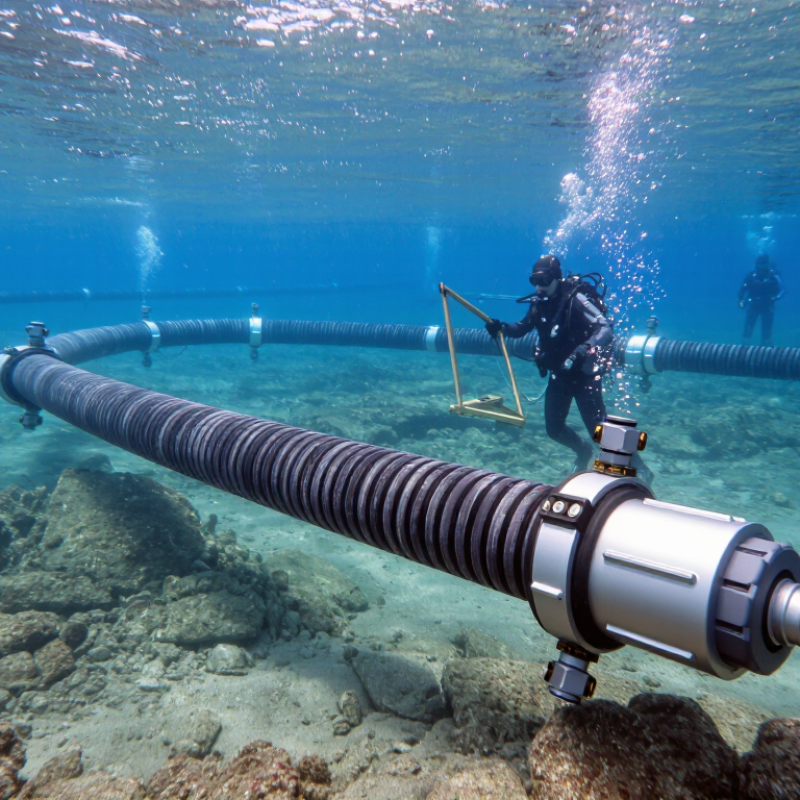
Choosing a submarine hose in 2026 starts with the seawater, not the catalog.
Salt, currents, temperature changes, and seabed movement can attack the hose differently. UNCTAD’s Review of Maritime Transport 2024 states that over 80% of global merchandise trade moves by sea. That scale makes hose reliability an operational issue, not a minor purchasing detail.
Match the liner to the transferred medium. Nitrile rubber usually suits petroleum products, while EPDM performs better with water, weather, and some chemicals. EPDM is a poor choice for many hydrocarbons. Polyurethane can improve abrasion resistance where the hose touches gravel or a rough seabed.
Check permeation, temperature limits, pressure cycles, and bend radius together. One specification rarely solves everything.
The OCIMF GMPHOM 2009 guidance remains a useful reference for offshore hose design and testing, but project conditions still require engineering review.
Climate pressure adds another variable.
The IMO Fourth Greenhouse Gas Study estimated shipping produced 2.89% of global human-caused emissions in 2018. Future cargoes may include lower-carbon fuels with different material compatibility risks. Do not assume an existing hose is suitable.
Ask for documented compatibility testing and traceable inspection records. I have seen selection decisions focus on burst pressure while ignoring abrasion. That mistake is easy to repeat.
A practical review should examine the hose, couplings, buoyancy system, storage method, and inspection access as one connected system.
Temperature data from the actual route matters more than a comfortable laboratory average.