
 عربي
عربي عربي
عربي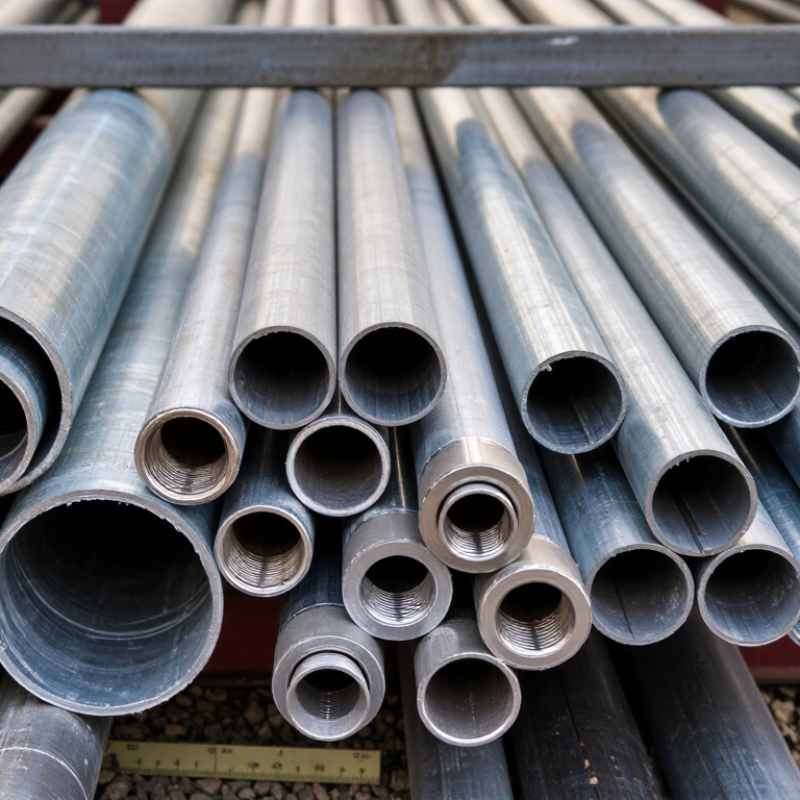
How to Choose the Right Galvanized Carbon Steel Pipe?
Galvanized carbon steel pipe is not defined by coating alone. Its base grade, manufacturing method, and wall thickness also matter. ASTM A53 is widely used for water, air, and general mechanical service. It is available in welded and seamless forms. ASTM A106 is a seamless grade for higher-temperature service, but it may be unnecessarily costly for ordinary utility lines. Structural grades, such as ASTM A500, suit frames and supports better than pressure piping.
Compare the specifications carefully. Nominal size does not equal actual outside diameter. A 2-inch pipe commonly measures 2.375 inches outside. Schedule 40 offers a different wall thickness from Schedule 80. That difference affects weight, pressure capacity, bending resistance, and connection space. Check whether the pipe has plain, threaded, or grooved ends. Confirm the zinc coating requirement, coating uniformity, and minimum thickness from the applicable standard. A bright surface alone proves little.
In practical inspections, I check the marking, heat number, dimensions, and mill certificate before installation. Coating damage around threads needs attention. The zinc layer can be scraped during handling. Do not select the heaviest pipe automatically. It may create higher costs without improving service life. I once treated wall thickness as the main decision, but the connection method caused the real delay. That was a useful correction. Temperature, fluid type, support spacing, and local conditions still deserve a second review.