
 عربي
عربي عربي
عربيNews & Blogs
How to Choose the Right 40 ft Container for Shipping?
Choosing the right 40 ft container is more than selecting a larger steel box. It requires a clear view of cargo size, weight, loading method, route, and handling conditions. A standard 40 ft container may suit cartons, furniture, machinery, or palletized goods. However, a 40 ft high cube container provides extra internal height. That difference can prevent costly repacking.
Jan Hoffmann, a respected maritime transport expert and former UNCTAD trade logistics chief, has said, “A port is not just a place where ships call; it is a critical link in the supply chain.” His observation applies directly to container selection. A container must work from the warehouse floor to the final destination. Door dimensions, forklift access, payload limits, and ventilation all matter. Small details can create large problems.
This guide examines the practical choices behind a 40 ft container. It compares standard and high cube designs, explains usable capacity, and considers cargo protection. It also discusses inspection points, including floor condition, door seals, corner posts, and visible corrosion. Measurements should be taken before booking. Assumptions are risky.
The best option is not always the biggest one. A heavier container may increase handling costs or reduce available payload. A high cube can improve space efficiency, but only when the cargo can be safely stacked. No guide can predict every delay. Still, careful planning reduces avoidable mistakes. The process is not perfect, and real shipments sometimes expose weak decisions. That is why reliable specifications, experienced freight advice, and verified container condition should guide the final choice.
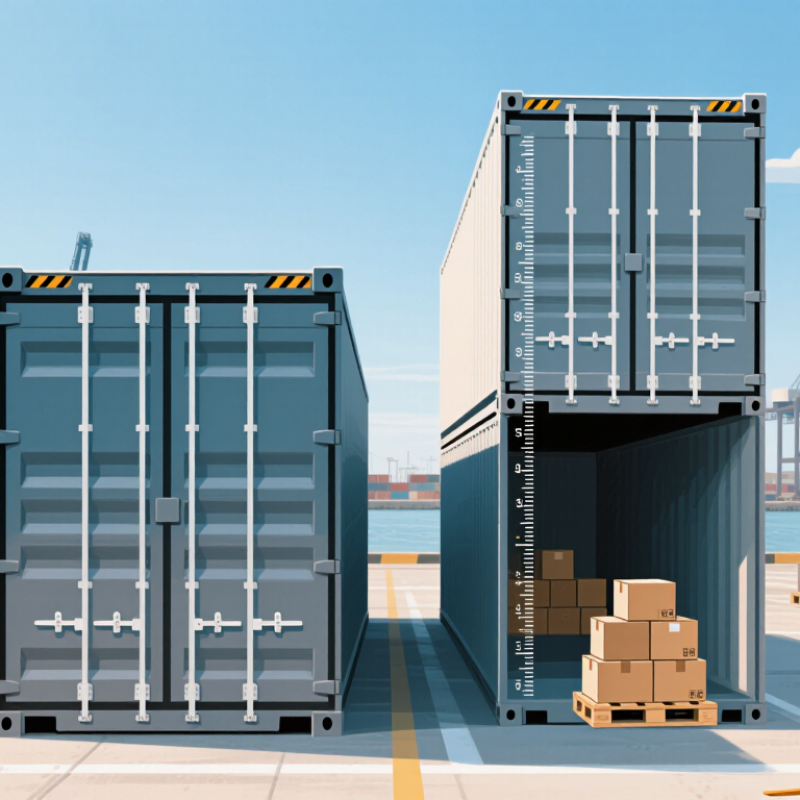
Define Your Cargo, Weight, and Loading Requirements
How to Choose the Right 40 ft Container for Shipping?
Cargo definition should come before container selection. List every carton, pallet, machine, and loose item. Record length, width, height, quantity, and actual weight. A standard 40-foot dry container offers about 67.7 cubic meters internally, according to ISO 668 dimensions. A 40-foot high-cube unit provides greater height, often near 76 cubic meters. More space is not always better.
Weight needs equal attention. Typical payload capacity ranges from 26 to 28 tonnes, but the container’s CSC plate controls the usable limit. Do not trust a booking estimate alone. Weigh pallets after wrapping, including packaging and moisture-sensitive materials. UNCTAD’s Review of Maritime Transport 2023 reports that maritime shipping carries over 80% of global merchandise trade, making accurate cargo information essential for reliable planning.
Loading requirements may change the decision. Heavy machinery belongs low and near the center, while lighter cartons can fill upper gaps. Leave clearance for doors and use suitable restraints. Check pallet dimensions against the internal door width, not only the floor area. A small mistake here can stop loading.
The calculation may still be wrong. Cartons can bulge, pallets can vary, and scales may be poorly calibrated. Recheck the heaviest pieces separately. Consider a high-cube container only when height, volume, or loading equipment truly requires it. Keep the verified weight record with the shipping documents.
| Container Type | Typical Internal Dimensions (L × W × H) |
Approximate Internal Volume | Typical Door Opening (W × H) |
Typical Tare Weight | Common Maximum Gross Weight | Best Suited Cargo | Key Selection Considerations |
|---|---|---|---|---|---|---|---|
| 40 ft Standard Dry | 12.03 × 2.35 × 2.39 m 39 ft 5 in × 7 ft 8 in × 7 ft 10 in |
Approximately 67.7 m³ 2,390 ft³ |
2.34 × 2.28 m 7 ft 8 in × 7 ft 6 in |
Approximately 3,700–4,000 kg | Commonly up to 30,480 kg Subject to the container safety plate and route limits |
Cartons, furniture, machinery, packaged goods, textiles, and general dry cargo | Choose this option when the cargo fits within the standard height and does not require temperature control or special loading access. |
| 40 ft High Cube Dry | 12.03 × 2.35 × 2.70 m 39 ft 5 in × 7 ft 8 in × 8 ft 10 in |
Approximately 76.3 m³ 2,694 ft³ |
2.34 × 2.58 m 7 ft 8 in × 8 ft 6 in |
Approximately 3,900–4,200 kg | Commonly up to 30,480 kg Subject to the container safety plate and route limits |
Lightweight, high-volume cargo; tall cartons; furniture; retail fixtures; and cargo requiring extra headroom | Provides about 30 cm of additional internal height and more usable volume than a standard dry container. Confirm that the increased height is acceptable for road and warehouse access. |
| 40 ft High Cube Reefer | Approximately 11.56 × 2.29 × 2.54 m Dimensions vary by equipment design |
Approximately 67 m³ Varies by reefer model |
Approximately 2.29 × 2.56 m | Approximately 4,500–4,800 kg | Often around 30,480 kg gross Confirm the equipment plate and carrier limit |
Frozen, chilled, or temperature-sensitive food, pharmaceuticals, flowers, and other perishable products | Requires an electrical power supply during storage and transport. Do not block the air return or air delivery channels; maintain the required airflow around the cargo. |
| 40 ft Open Top | Comparable floor length and width to a dry container; height varies by design | Usually lower than a dry container because of the removable roof and internal fittings | End doors plus an open roof for top loading | Typically higher than a dry container of the same length | Based on the container safety plate and cargo distribution | Over-height machinery, scrap metal, timber, stone, and cargo loaded by crane | Useful when cargo cannot pass through the doors. Check whether the loaded height and covering method comply with the shipping line and transport route requirements. |
| 40 ft Flat Rack | Approximately 12.08 m long × 2.44 m wide platform End-wall height varies |
Not normally stated as enclosed volume | No enclosed side or roof opening | Often approximately 5,500–6,000 kg | Varies substantially by design and lashing configuration | Oversized machinery, vehicles, steel structures, pipes, and heavy project cargo | Confirm cargo dimensions, center of gravity, lashing points, axle limits, and whether the cargo exceeds the permitted width, length, or height envelope. |
| 40 ft Platform | Approximately 12.19 m long × 2.44 m wide platform | Not applicable | No enclosed doors | Varies by platform design | Varies by equipment rating and shipment plan | Very heavy or exceptionally oversized cargo requiring specialized securing | Requires an engineered loading and lashing plan. Confirm port handling, road permits, crane capacity, and transport insurance before booking. |
| Weight Planning | Maximum payload is calculated as maximum gross weight minus tare weight. | Example: 30,480 kg gross weight − 3,900 kg tare weight = approximately 26,580 kg theoretical payload. | Use the lower limit shown on the container safety plate, booking confirmation, road regulations, or vessel route requirements. | Cargo must be evenly distributed. Concentrated heavy loads may require dunnage, load-spreading plates, or special equipment even when the total weight is within the payload limit. | |||
| Pallet and Loading Guide | A 40 ft dry container may typically accommodate approximately 20–21 standard 48 × 40 in pallets or about 25 Euro pallets in a single layer. | Actual capacity depends on pallet orientation, carton overhang, packaging, aisle requirements, and the use of load bars or airbags. | Prepare a scaled loading plan before booking when cargo includes mixed pallet sizes, fragile products, irregular shapes, or forklift restrictions. | ||||
| Loading and Access Check | Measure the longest, widest, and highest packed dimensions, including skids, pallets, protective packaging, and lifting points. | Compare the packed dimensions with the door opening, internal dimensions, and forklift operating clearance. | Confirm warehouse dock height, forklift capacity, ramp access, loading sequence, cargo securing materials, and whether top or side loading is necessary. | ||||
| Final Verification | All dimensions, tare weights, payload limits, and volume figures are typical planning values. Equipment specifications vary by manufacturer, container series, and operating condition. Always verify the actual container's safety approval plate, carrier specification, cargo weight, route restrictions, and local road regulations before shipment. | ||||||
Planning principle: select the container by cargo dimensions first, then verify weight distribution, loading access, temperature requirements, securing needs, and applicable transport regulations.
Related Posts
-
What is a 40 ft Storage Container and How Can It Benefit You
-
2026 How to Choose the Right 40 ft Storage Container for Your Needs?
-
40 Best Uses for a 40 ft Storage Container in Your Business or Home?
-

40 ft Container Tips for Global Buyers to Save Money?
-

How to Choose the Best 40 Storage Containers for Your Needs?
-
What is the cost of a 40 ft container for global shipping?