


News & Blogs

How to Choose Child Car Seat Accessories for Global Sourcing

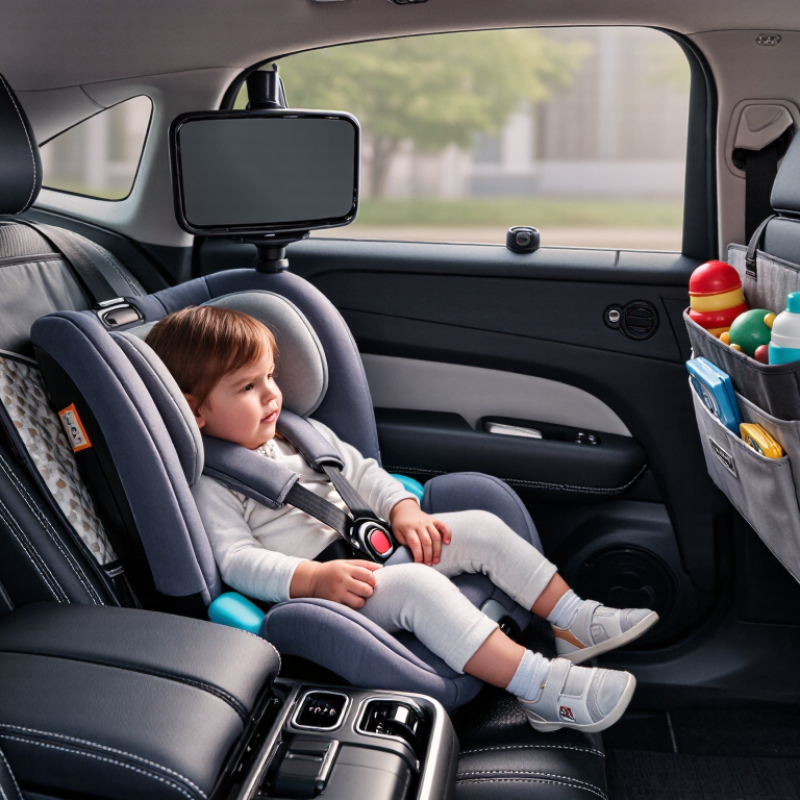
Choosing Child Car Seat Accessories for global sourcing requires more than comparing prices and colors. Safety, compatibility, durability, and supplier reliability must guide every decision. A loose strap cover, weak mirror mount, or poorly fitted organizer can create avoidable risks inside a moving vehicle. Small details matter.

Experienced sourcing teams should examine each accessory’s purpose, materials, dimensions, and installation method. For example, a sunshade should remain secure near a window, while a seat protector should resist tearing under repeated pressure. Product samples deserve practical testing. Check stitching, buckles, edges, odors, and cleaning performance. Ask suppliers for material specifications, inspection records, and test reports from competent laboratories. Documents alone are not enough.

Global markets add complexity. Vehicle designs, child restraint systems, packaging rules, and safety expectations may differ by destination. Confirm compatibility with the intended car seat models and regional requirements before placing a large order. A reliable supplier should explain limitations clearly, not promise universal fit without evidence. That promise deserves caution.

Cost still matters. However, the cheapest accessory may produce higher returns, complaints, or quality failures. Compare total sourcing value, including tooling, packaging, testing, shipping, and after-sales support. Visit factories when possible, or use independent audits when distance prevents it. No checklist is perfect. We may overlook a small issue during review. Continuous sampling and honest feedback help correct it. Careful sourcing protects children, strengthens brand trust, and supports stable international growth.
How to Choose Child Car Seat Accessories for Global Sourcing

Quantify Safety Value: Child Restraints Cut Death Risk by 54–80%

How to Choose Child Car Seat Accessories for Global Sourcing

Quantify Safety Value: Child Restraints Cut Death Risk by 54–80%

Research commonly reports that child restraints reduce fatality risk by approximately 54–80%. The range varies by child age, restraint type, crash conditions, and correct installation. This figure should guide sourcing decisions, not replace careful verification. A seat may look secure while the harness sits too high, twists, or leaves slack. Small fitting errors matter.

Choose accessories that support proper restraint use. Useful examples include approved harness pads, installation aids, protective seat liners, and clearly marked adjustment tools. Check whether each accessory changes belt routing, buckle access, or shell contact. It should not add excess softness beneath the child. It should not block inspection of the harness.

For global sourcing, request material declarations, test reports, dimensional drawings, and batch inspection records. Confirm compatibility with different vehicle belts and restraint systems. Review temperature resistance, stitching strength, flame behavior, and cleaning instructions. Requirements differ across destination markets, so generic compliance claims are weak evidence. Ask for traceable documents.

The uncomfortable point is simple: more accessories do not always mean more safety. Some products solve a storage problem but introduce movement during impact. Others appear convenient yet encourage incorrect installation. I would test the complete system with a child-sized dummy, then repeat the check after adjustment and cleaning. Safety data is powerful, but product context remains easy to overlook.

Classify Accessories Under UN R129, UN R44, FMVSS 213, and FMVSS 302

How to Choose Child Car Seat Accessories for Global Sourcing

Accessory classification begins with its function, not its appearance. Under UN R129, check whether an insert, harness pad, belt guide, or support cushion changes the restraint’s size range, belt routing, or side-impact performance. If it is supplied with the seat, assess it as part of the approved configuration. Under UN R44, confirm the relevant group, installation method, and approval documentation. R44 acceptance may differ by market, so verify current local requirements.

FMVSS 213 focuses on the child restraint system and its performance during crash testing. A detachable accessory can still affect restraint geometry, webbing movement, or dummy loading. Therefore, test the complete configuration, not only the main seat. FMVSS 302 is relevant when textile, foam, plastic, or other materials may contribute to interior fire risk. Keep material specifications, supplier declarations, and laboratory reports in one traceable file. The exact boundary is sometimes unclear. I have learned that treating every accessory as “non-safety-critical” creates avoidable gaps.

Tips: Draw a simple accessory map before contacting factories. Mark each item as structural, positioning, comfort, or decorative. Ask whether it changes belt contact or installation. Request samples from actual production materials. Photograph labels and packaging. Do not rely on a verbal compliance claim. A small cover can alter belt friction. Recheck it.

Apply R129’s 15-Month Rear-Facing Rule and Side-Impact Test Scope

When sourcing child car seat accessories globally, begin with R129 compatibility, not appearance.

R129 requires children to travel rear-facing until at least 15 months. Some approved seats support rear-facing use for longer, depending on their design and approval range. An accessory must not encourage earlier forward-facing use or alter the seat’s intended installation. Check whether inserts, head supports, covers, or harness pads fit the exact seat model and child height range.

Side-impact protection needs careful attention.

R129 approval includes side-impact testing within the applicable restraint system scope. However, that approval normally covers the tested seat configuration, not every separately sourced accessory. A thick cushion can change belt position. A rigid attachment may affect energy management near the door. These details are easy to overlook during purchasing. Request approval documents, installation instructions, material specifications, and test evidence from suppliers. Confirm that added parts do not block harness adjustment, ISOFIX access, belt routing, or warning labels. Visual similarity is not proof of compatibility.

Tips:

Ask suppliers for dimensional drawings and sample-fit checks. Test the accessory on the smallest and largest approved child sizes. Review side-impact risks with an independent laboratory when the design changes. A soft-looking product is not automatically harmless. My own sourcing checklist would also record unclear claims, because assumptions often survive until the first physical inspection. Use traceable batch information and retain photos from every fit test.

Check Materials Against FMVSS 302’s 102 mm/min Burn-Rate Limit

How to Choose Child Car Seat Accessories for Global Sourcing

Material selection should begin with FMVSS 302, especially for covers, padding, straps, and organizer panels. The standard limits the burning rate to 102 mm/min. A supplier’s material certificate is useful, but it should not replace independent verification. Ask for the exact material grade, thickness, color, coating, and production batch. Small changes can affect flame behavior.

During sourcing, request test samples from finished accessories, not only raw fabric rolls. Seams, foam edges, labels, and laminated layers may burn differently. A qualified laboratory should condition samples and test them using the applicable method. Keep test reports, sample photographs, and traceable batch records. I have seen teams approve a fabric, then discover that its printed coating changed the result. That mistake is easy to miss.

Tips: Compare at least two production samples. Check every exposed component. Confirm the 102 mm/min limit in writing. Do not assume “fire-resistant” means compliant. Ask suppliers to report failed tests honestly. A passing report can still be incomplete if it covers another thickness or material structure. Review updates when suppliers change dyes, foam density, adhesives, or stitching. Good sourcing requires practical checks, not paperwork alone.

FMVSS 302 sets a maximum horizontal burn rate of 102 mm/min for applicable vehicle interior materials. The same ceiling should be used when screening child car seat accessory materials such as covers, padding, harness covers, and trim. These values represent the regulatory screening limit, not supplier test results; final approval should be based on laboratory-tested material assemblies.

Audit Suppliers Through ISO 9001 Controls, Lab Tests, MOQ, and Landed Cost

How to Choose Child Car Seat Accessories for Global Sourcing

Audit Suppliers Through ISO 9001 Controls, Lab Tests, MOQ, and Landed Cost

A reliable supplier audit goes beyond checking an ISO 9001 certificate. Review controlled drawings, revision records, incoming inspection logs, and corrective-action reports. Ask to trace one batch from resin receipt to packed cartons. The supplier should identify operators, inspection dates, and rejected quantities. Missing records matter. They often reveal weak process discipline.

Request independent laboratory testing for materials, stitching, buckles, padding, and attachment strength. Match every test to the accessory’s intended use and destination market. Examine raw data, sample identification, test dates, and failure notes. Do not accept a polished certificate without test scope. A repeated test may expose inconsistent production. That happened with stitching samples from different shifts. The supplier corrected the machine settings, but the first approval was too optimistic.

MOQ must reflect realistic demand, not only factory efficiency. Calculate tooling, packaging, inspection, freight, duties, insurance, storage, and possible rework. A low unit price can become expensive after air shipment or damaged cartons. Request landed-cost scenarios at several order volumes. Check whether the supplier can separate pilot quantities from full production. Forecasts are rarely perfect. Leave room for slower sales, design changes, and unexpected testing costs. Document each assumption before comparing quotations.

How to Choose Child Car Seat Accessories for Global Sourcing — Audit Suppliers Through ISO 9001 Controls, Lab Tests, MOQ, and Landed Cost
Accessory Category Typical Material / Construction Applicable Compliance Checks ISO 9001 Supplier-Control Evidence Recommended Pre-Shipment Lab Tests Indicative MOQ
(units/SKU)
Indicative FOB Cost
(USD/unit)
Estimated Freight & Insurance
(USD/unit)
Illustrative Duty
(% of customs value)
Inspection Allocation
(USD/unit)
Estimated Landed Cost
(USD/unit)
Supplier Audit Score
(100)
Decision Status Key Sourcing Risk / Control
Seat-back Organizer Polyester fabric, stitched pockets, elastic edging, adjustable straps Flammability review for destination market; REACH restricted-substance screening; no interference with harness routing or seat-belt access Approved fabric and trim list; incoming-material inspection; sewing-process checklist; corrective-action records; lot traceability Material composition; colorfastness; seam-strength sampling; abrasion; small-parts and sharp-edge inspection 500 $4.20 $0.42 12% $0.10 $5.28 92 Approve Prevent attachment straps from crossing or obstructing the child-restraint harness. Use fit checks on representative vehicle seats.
Sun Shade Polyester mesh or multilayer fabric, suction cups or static-cling film REACH screening; adhesive and plasticizer review; visibility and emergency-egress assessment; no sharp edges Supplier-controlled adhesive specification; batch identification; incoming suction-cup inspection; documented nonconformance process Adhesion or retention test; UV-aging check; tear strength; flammability where required; small-part inspection 1,000 $1.85 $0.21 12% $0.05 $2.36 89 Approve Confirm that the product does not materially reduce the driver’s field of view or block required vehicle safety features.
Seat-Belt Positioning Cushion Polyester cover, polyurethane or expanded-foam core, hook-and-loop closure Must not be represented as a crash-restraint device unless separately certified; material chemical screening; flammability review Foam-density control; cover-material inspection; change-control procedure; batch records; complaint and recall traceability Foam density; compression set; cover seam strength; chemical screening; fit and belt-position assessment 300 $5.90 $0.55 12% $0.15 $7.31 84 Conditional Do not claim crash protection without the applicable restraint certification. Validate that the cushion does not alter belt geometry or routing.
Harness Comfort Pad Polyester or nylon textile, low-density foam, stitched or molded attachment loops REACH restricted-substance screening; flammability review; compatibility with harness webbing and buckle area Needle and thread control; attachment-loop inspection; supplier material declarations; first-article approval; lot traceability Seam and loop strength; abrasion; colorfastness; chemical screening; small-parts inspection after conditioning 1,000 $1.10 $0.14 12% $0.04 $1.42 91 Approve Check that padding cannot migrate into the buckle or reduce harness contact with the child. Require dimensional tolerances.
Child Car Seat Travel Bag Coated polyester or nylon, zipper, webbing handles, reinforced base panels REACH screening; textile colorfastness; zipper and strap safety; labeling and packaging review Webbing tensile specification; zipper incoming inspection; stitching audit; packing verification; shipment sampling plan Handle and strap tensile test; seam strength; zipper cycle test; abrasion; colorfastness; dimensional inspection 500 $7.40 $0.68 12% $0.12 $9.09 87 Approve Verify load-bearing areas and reinforcement. Packaging must protect buckles, harnesses, and shell surfaces during transport.
Protective Seat Mat TPU, EVA, or molded polymer with anti-slip texture and raised edge Material chemical screening; vehicle-seat compatibility; flammability review; compression and deformation assessment Polymer batch control; mold-maintenance records; dimensional inspection; surface-defect criteria; change approval for resin or additives Static-load and compression test; slip-resistance assessment; heat-aging; odor screening; chemical screening; dimensional stability 500 $6.60 $0.62 12% $0.12 $8.15 82 Conditional Confirm that the mat does not change the child-restraint installation angle, reduce friction at the vehicle seat, or interfere with ISOFIX/LATCH access.
ISOFIX / LATCH Guide Sleeve Impact-resistant polymer guide, molded or reinforced one-piece construction Compatibility and dimensional verification against the intended anchorage system; material chemical screening; no sharp edges Molded-part dimensional control; resin lot traceability; tooling-change approval; first-article inspection; defect sample retention Dimensional fit; insertion and removal cycling; edge-radius inspection; heat-aging; material and crack-resistance screening 1,000 $0.85 $0.11 12% $0.03 $1.10 76 Hold High compatibility risk. Approve only after vehicle-seat fit trials and confirmation that the guide does not modify the certified restraint interface.
Buckle Cover / Decorative Accessory Soft textile or flexible polymer cover with elastic or hook-and-loop attachment Must not obstruct buckle release, harness adjustment, or warning labels; REACH screening; small-parts review Attachment-strength criteria; label and artwork control; incoming-material checks; line clearance; complaint escalation procedure Buckle-release accessibility; attachment retention; abrasion; small-parts; chemical screening; usability inspection 1,000 $0.70 $0.10 12% $0.03 $0.91 80 Conditional Reject any design that can delay emergency release, cover required labels, or become detached and accessible to a child.
Costing basis: Illustrative landed cost is calculated as FOB cost + freight and insurance + estimated duty on customs value + allocated pre-shipment inspection cost. Freight, duty, taxes, port charges, destination handling, and market-specific certification fees vary by route and importing country. ISO 9001 certification supports a supplier’s quality-management system but does not replace product-specific compliance testing. Confirm the current requirements of the destination market, including applicable UN ECE, FMVSS, CPSIA, REACH, or other national regulations, before purchase order release.