
 عربي
عربي عربي
عربيNews & Blogs
10 Best Takeaway Food Containers for Food Businesses?
Choosing the right takeaway packaging affects food quality, customer trust, and daily operating costs. This guide explores 10 Best Takeaway Food Containers for Food Businesses, using practical considerations rather than attractive product photos alone. A container should protect meals during preparation, delivery, and storage. It must also suit the food inside. Crispy chicken needs ventilation, while soup needs a dependable seal. Small details matter.
The selection process considers material strength, leak resistance, heat retention, stackability, presentation, and overall value. It also examines how containers perform during realistic service conditions: a packed counter, a busy delivery shelf, and a twenty-minute journey across town. Experienced kitchen teams know that the cheapest option can create hidden costs through spills, soggy food, or repeated packing failures. Still, no container is perfect. A sturdy box may use more material, and a sustainable-looking option may not suit oily dishes or high temperatures. These trade-offs deserve honest attention.
Reliable recommendations should reflect supplier specifications, food-contact suitability, and the needs of different business models. A café, meal-prep company, and street-food vendor may require very different formats. We encourage businesses to test samples with their actual menu before making a large purchase. Check the lid after tipping the container. Feel the base after hot filling. Watch how the food arrives. This guide offers a practical starting point, not a permanent answer. Menus change, customer expectations shift, and packaging choices should be reviewed accordingly.
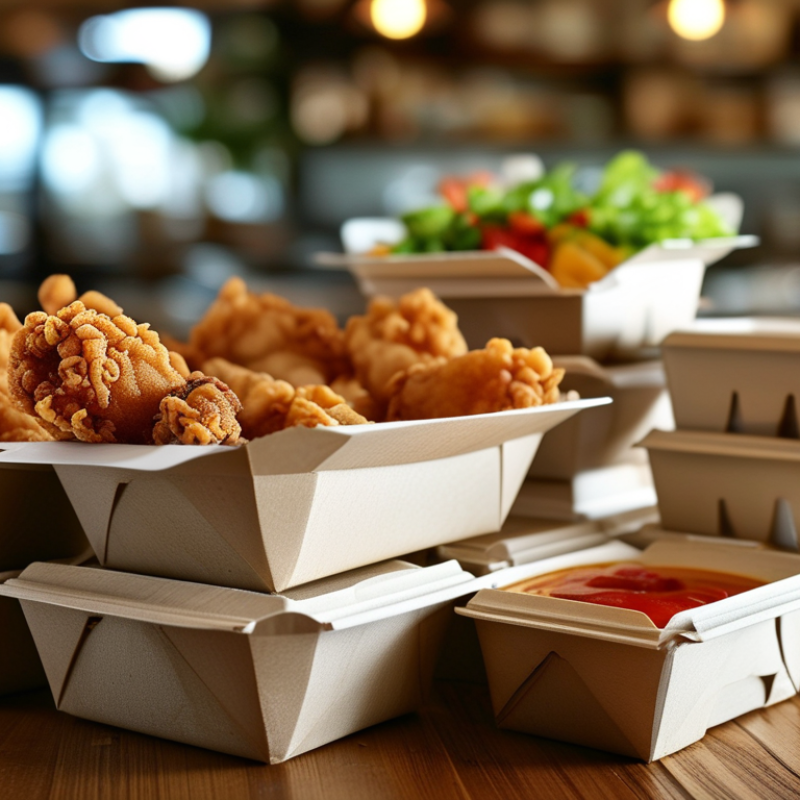
What Makes a Takeaway Food Container Suitable for Food Businesses
10 Best Takeaway Food Containers for Food Businesses?
Suitable takeaway packaging starts with food safety, not appearance. The FDA Food Code 2022 recommends holding cold food at 41°F (5°C) or below and hot food at 135°F (57°C) or above. A suitable container must support those limits during realistic delivery times. It should resist leaks, grease, crushing, and temperature changes. Lids need a secure fit. Staff should close them quickly during a crowded lunch rush.
Material choice also affects waste, customer trust, and operating cost. The OECD Global Plastics Outlook reports 353 million tonnes of plastic waste were generated globally in 2019. This makes lightweight designs and responsible material use increasingly important. The UNEP Food Waste Index Report 2024 estimates 1.05 billion tonnes of food were wasted in 2022. Packaging cannot solve food waste alone, but poor sealing can worsen it through spills and damaged meals. Recyclability should be verified locally, not assumed from a printed claim.
Practical testing reveals the real weaknesses. Fill each container with hot noodles, oily curry, or cold salad. Then stack it, tilt it, and hold it for delivery time. Check condensation, lid movement, and sauce leakage. A container that performs well in a showroom may fail on a motorbike. Still, no format is perfect. Fiber options may soften, while rigid plastic can perform better but create disposal concerns. For the ten best choices, businesses should compare safety, durability, cost, customer handling, and local recovery systems.
| Rank | Container Type | Common Capacity | Typical Material | Temperature Suitability | Leak Resistance | Microwave Suitable | Reusability | Recyclability | Best Food Applications | Business Advantages | Suitability Score |
|---|---|---|---|---|---|---|---|---|---|---|---|
| 1 | Hinged-Lid PP Container | 500–1,000 ml | Food-grade polypropylene | Approximately −20°C to 120°C | High when securely closed | Generally suitable | Limited commercial reuse | Depends on local recycling facilities | Rice dishes, pasta, curries, stir-fries and mixed meals | Strong, stackable, lightweight and suitable for hot food | ★★★★★ |
| 2 | Fiber Bagasse Clamshell | 500–1,200 ml | Molded sugarcane fiber | Usually suitable for hot and cold food; avoid prolonged liquid storage | Moderate; may soften with very wet food | Check supplier instructions | Single-use | Often commercially compostable where accepted | Burgers, fried food, sandwiches, salads and bakery products | Plastic-free appearance, good ventilation and renewable fiber content | ★★★★★ |
| 3 | Clear PET Deli Container | 250–1,000 ml | Food-grade polyethylene terephthalate | Best for chilled or room-temperature food; not intended for hot filling | High for cold foods | Not generally suitable | Limited commercial reuse | Widely recyclable where PET collection exists | Salads, fruit, desserts, cold noodles and prepared foods | Excellent product visibility, secure lids and consistent sizing | ★★★★☆ |
| 4 | Kraft Paper Soup Cup with Lid | 240–960 ml | Paperboard with a moisture-resistant lining | Designed for hot liquids; follow the supplier’s temperature limit | High with a properly fitted lid | Not generally suitable | Single-use | Lining can affect recyclability | Soup, broth, porridge, noodles and hot beverages | Good insulation, easy portion control and efficient stacking | ★★★★☆ |
| 5 | Aluminum Foil Tray with Board Lid | 450–2,000 ml | Aluminum with paperboard or foil lid | Suitable for hot food and many oven applications; do not microwave | High when the lid is crimped or secured | Not suitable | Limited reuse after thorough cleaning | Recyclable when clean and accepted locally | Roasted meals, baked pasta, casseroles and family portions | Excellent heat tolerance, rigidity and protection during transport | ★★★★☆ |
| 6 | Microwaveable PP Soup Container | 350–1,000 ml | Food-grade polypropylene | Approximately −20°C to 120°C, subject to product specification | High with a vented or threaded lid | Generally suitable with the lid vented | Limited commercial reuse | Depends on local recycling facilities | Soups, sauces, stews, noodles and liquid-based meals | Handles hot liquids well and reduces spills during delivery | ★★★★☆ |
| 7 | Paperboard Meal Box with Locking Tabs | 600–1,500 ml | Paperboard, sometimes with a grease-resistant coating | Suitable for warm and dry foods; avoid excessive liquid | Moderate; depends on coating and closure | Not generally suitable | Single-use | Coatings and food contamination may limit recycling | Rice meals, fried chicken, noodles, sandwiches and snacks | Lightweight, printable, easy to assemble and often space-efficient | ★★★★☆ |
| 8 | Reusable Tritan-Style Clear Container | 500–1,500 ml | Durable food-grade copolyester | Often suitable for chilled food and moderate reheating; verify limits | High with a silicone-sealed lid | Only when specifically labeled microwave-safe | Designed for repeated use | Not accepted in every recycling program | Meal-prep dishes, salads, premium takeaway and subscription meals | Durable, transparent, premium-looking and suitable for return schemes | ★★★★☆ |
| 9 | Molded Fiber Tray with Separate Lid | 400–1,200 ml | Molded paper or plant-fiber pulp | Suitable for warm food; prolonged exposure to liquids may reduce strength | Moderate to high depending on barrier treatment | Check supplier instructions | Single-use | Often compostable or recyclable where accepted | Grilled meals, side dishes, bakery items and food-service platters | Good rigidity, natural appearance and reduced reliance on conventional plastic | ★★★★☆ |
| 10 | Tamper-Evident PP Container | 250–1,000 ml | Food-grade polypropylene with breakable security seal | Usually suitable for chilled and hot food within the stated limit | High when the seal is intact | Often suitable; follow labeling instructions | Single-use or limited reuse | Depends on local recycling facilities | Delivery meals, sauces, desserts and high-value prepared foods | Provides visible tamper evidence, strong closure and customer confidence | ★★★★☆ |
| Selection note: Temperature ranges, compostability, recycling acceptance and microwave suitability vary by exact construction and local regulations. Food businesses should verify the supplier’s food-contact certification, closure performance, labeling requirements and waste-management options before purchase. | |||||||||||